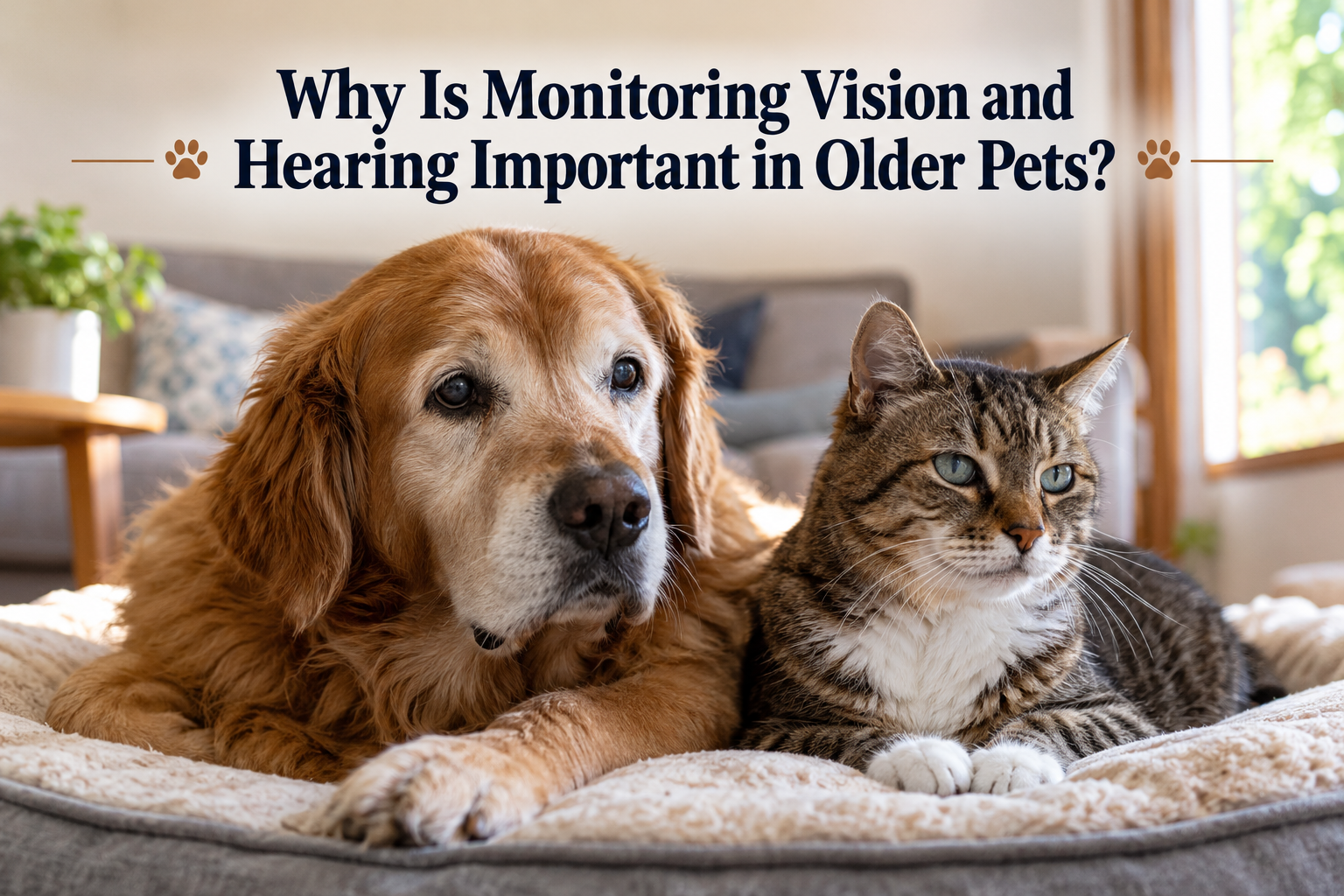
As pets grow older, their bodies experience many natural changes. They may become less active, sleep longer, and move more slowly than they did when they were young. However, some changes are not always easy to recognize. Vision and hearing problems are among the most common concerns that can affect the daily lives of senior dogs and cats. These problems may develop gradually, making them difficult for pet owners to notice during the early stages.
Monitoring vision and hearing in older pets is important because it helps identify health problems early, prevents accidents, reduces anxiety, and supports a better quality of life. A pet that cannot see or hear properly may struggle with familiar activities, even when it appears otherwise healthy.
Understanding how aging affects these senses allows owners to provide appropriate care and make their pets feel comfortable and secure.
Understanding Vision and Hearing Changes in Aging Pets
Just like humans, dogs and cats can experience changes in their senses as they age. Their eyes and ears may become less effective because of natural aging or underlying medical conditions.
Some older dogs develop a cloudy appearance in their eyes due to a condition called nuclear sclerosis. This age related change is common and usually causes only limited changes in vision. However, cataracts, glaucoma, and retinal diseases can cause more serious problems.
Hearing loss is another concern in senior pets. The delicate structures responsible for detecting sound may gradually become less effective. As a result, older pets may stop responding to familiar voices, household sounds, or commands.
Not every change is caused by aging alone. Infections, injuries, inflammation, and other medical conditions can also affect vision and hearing.
This is why regular observation and veterinary examinations are essential.
Why Early Detection of Vision Problems Matters
Vision plays an important role in helping pets understand their surroundings. Dogs and cats use their eyesight to recognize movement, locate objects, and move safely through familiar environments.
When vision begins to decline, pets may struggle with activities that were previously easy.
A dog might hesitate before climbing stairs, while a cat may become uncertain about jumping onto furniture.
Identifying vision problems early helps veterinarians investigate their causes and recommend suitable treatment.
Some eye conditions can be managed more effectively when diagnosed promptly. Others may require ongoing care to prevent discomfort or further deterioration.
Regular monitoring also helps owners make necessary adjustments at home before their pets experience serious difficulties.
Common Signs of Vision Loss in Older Pets
Vision loss does not always happen suddenly. In many cases, changes develop slowly over several months.
Pet owners should observe their animals carefully for unusual behavior.
Common signs of declining vision include:
- Bumping into furniture or other objects
- Hesitating when entering unfamiliar rooms
- Difficulty locating food bowls or toys
- Becoming nervous in poorly lit areas
- Avoiding stairs or unfamiliar surfaces
- Missing jumps that were previously easy
- Showing unusual eye cloudiness or redness
- Becoming startled when someone approaches unexpectedly
Some pets may also become less interested in exploring their surroundings.
A dog with declining eyesight might prefer familiar walking routes, while a cat may spend more time in safe resting areas.
These signs do not always indicate vision loss, but they deserve attention.
Sudden blindness, severe eye pain, or a red and swollen eye requires urgent veterinary care.
Why Hearing Monitoring Is Important for Senior Pets
Hearing helps pets communicate with their owners and remain aware of their surroundings.
Dogs often respond to spoken commands, familiar voices, and environmental sounds. Cats also use hearing to recognize activity, detect movement, and respond to people or other animals.
When hearing begins to decline, pets may become less responsive.
An older dog might no longer come when called, while a cat may continue sleeping despite loud household activity.
Some owners mistakenly believe that their pets are becoming stubborn or ignoring instructions.
In reality, the animal may simply be unable to hear properly.
Recognizing hearing loss allows owners to change their communication methods and provide a safer environment.
Common Signs of Hearing Loss in Dogs and Cats
Hearing loss can be difficult to identify, especially when pets remain active and comfortable in familiar surroundings.
Owners should pay attention to changes in how their pets respond to sound.
Possible signs include:
- Not responding when called by name
- Sleeping through noises that previously caused a reaction
- Becoming startled when touched unexpectedly
- Failing to notice someone entering the room
- Responding better to gestures than spoken commands
- Showing confusion during familiar routines
- Barking or vocalizing differently than usual
Some senior pets may also become more dependent on visual signals.
For example, an older dog may respond when it sees its owner but fail to react when the owner calls from another room.
These changes should be discussed with a veterinarian.
Hearing loss can sometimes result from treatable ear conditions rather than permanent age related changes.
How Vision and Hearing Problems Affect Pet Behavior
Vision and hearing changes can influence an older pet’s emotional wellbeing.
Animals depend on their senses to understand what is happening around them.
When those senses become less reliable, ordinary situations may feel confusing.
A dog with hearing loss might become frightened when someone approaches from behind. A cat with poor eyesight may hide more frequently because it cannot confidently navigate unfamiliar spaces.
Some pets become quieter, while others show increased vocalization or restlessness.
Changes in behavior are sometimes mistaken for normal aging.
However, anxiety, confusion, and reduced confidence may be connected to sensory problems.
Owners should observe when these behaviors occur and whether they appear related to unfamiliar sounds, movement, or surroundings.
Providing reassurance and maintaining predictable routines can help older pets remain comfortable.
The Importance of Regular Veterinary Examinations
Routine veterinary checkups are essential for monitoring vision and hearing in older pets.
During an examination, a veterinarian may inspect the eyes, evaluate pupil responses, examine the ears, and assess the animal’s general health.
Additional tests may be recommended when a problem is suspected.
Eye examinations can help identify conditions such as cataracts, glaucoma, inflammation, or retinal abnormalities.
Ear examinations can reveal infections, excessive wax, or other conditions that may interfere with hearing.
Specialized hearing tests may also be available when needed.
Many senior pets benefit from veterinary wellness examinations approximately every six months, although the appropriate schedule depends on their health.
Regular appointments allow veterinarians to compare changes over time and recommend suitable treatment or supportive care.
Creating a Safe Home for Pets With Vision Loss
A comfortable home environment becomes especially important when an older pet experiences reduced eyesight.
Pets often rely on memory and familiar surroundings to navigate safely.
Frequent changes in furniture placement may make movement more difficult.
Owners can help by keeping food bowls, water containers, and sleeping areas in consistent locations.
Stairs, balconies, swimming pools, and other dangerous areas should be secured when necessary.
Clutter should be removed from walking paths.
Soft lighting may help pets with some remaining vision move more confidently in darker spaces.
For cats, easily accessible resting places and lower climbing surfaces may reduce the risk of falls.
The goal is not to restrict the animal unnecessarily but to create surroundings where it can move with confidence.
Helping Older Pets With Hearing Loss
Pets with hearing difficulties can still enjoy affectionate relationships and daily activities.
The most important adjustment involves communication.
Instead of relying entirely on spoken commands, owners can introduce visual signals and familiar gestures.
A dog that cannot hear its name may learn to respond to a hand movement.
Owners should approach hearing impaired pets from the front whenever possible.
Sudden touching during sleep should be avoided because it may frighten the animal.
Gentle floor vibrations or visible movements can sometimes help attract attention without causing alarm.
Outdoor safety is particularly important.
Dogs with significant hearing loss should remain on a leash or inside securely enclosed areas because they may not hear approaching vehicles or warnings.
Cats with hearing loss are generally safer indoors or in secure outdoor enclosures.
These precautions allow pets to remain active while reducing avoidable risks.
Can Vision and Hearing Loss Be Treated?
Treatment depends on the underlying cause of the problem.
Some vision conditions can improve with appropriate veterinary treatment, while others cause permanent changes.
For example, certain cataracts may be suitable for surgical treatment after specialist evaluation. Eye infections and inflammation may respond to prescribed medication.
Glaucoma requires prompt veterinary attention because it can cause pain and permanent vision damage.
Hearing problems also have different causes.
Ear infections or blockages may sometimes be treatable.
However, hearing loss associated with age related changes in the inner ear is often permanent.
Even when normal hearing or vision cannot be restored, supportive care can greatly improve comfort and daily functioning.
Owners should never use human eye drops, ear medications, or home remedies without veterinary guidance.
How Nutrition Supports Healthy Aging
Good nutrition supports the overall health of older pets, including their eyes, nervous system, and immune function.
Senior dogs and cats need balanced diets that provide suitable amounts of protein, essential fats, vitamins, and minerals.
Some nutrients, including vitamin A and certain antioxidants, contribute to normal eye health.
However, supplements do not automatically prevent or reverse age related vision loss.
Excessive supplementation can also be harmful.
A veterinarian can help owners choose an appropriate diet based on the pet’s age, weight, medical history, and nutritional requirements.
Fresh drinking water and healthy body weight are equally important.
Proper nutrition cannot eliminate every age related condition, but it supports general wellbeing and helps pets remain healthier as they grow older.
Why Mental Stimulation Still Matters
Pets with reduced vision or hearing still need opportunities for mental activity and enjoyment.
Owners should adjust activities according to the animal’s abilities.
Dogs with poor eyesight may enjoy supervised scent games that encourage them to locate treats using their sense of smell.
Cats may benefit from familiar toys that provide gentle sounds or interesting textures, depending on their remaining senses.
Pets with hearing loss can enjoy games involving visual movement, food puzzles, and scent exploration.
Activities should take place in safe and familiar environments.
Short, enjoyable sessions are generally better than forcing a pet to participate when it appears tired or confused.
Mental stimulation helps maintain confidence and provides opportunities for positive interaction between pets and their owners.
Monitoring Changes Through Daily Observation
Daily observation is one of the simplest ways to recognize sensory changes in older pets.
Owners should pay attention to how their animals move, communicate, and respond to familiar situations.
A small notebook or phone record can be useful for tracking unusual behavior.
For example, an owner might record when a dog begins hesitating near stairs or when a cat stops responding to familiar household noises.
Noting when symptoms started and whether they are becoming more frequent can help veterinarians assess the problem.
Owners can also observe whether pets behave differently during daylight and nighttime.
However, home observations should not replace professional examinations.
Sudden changes in vision, balance problems, significant eye discomfort, or other serious symptoms require prompt veterinary assessment.
Supporting Emotional Comfort in Senior Pets
Older pets benefit from patience, familiarity, and gentle interaction.
Vision or hearing loss may make them more dependent on predictable routines.
Regular feeding schedules, familiar resting areas, and calm communication can reduce unnecessary stress.
Owners should avoid punishing pets for failing to respond to commands or becoming confused.
A dog that cannot hear instructions is not deliberately disobeying.
Similarly, a cat that avoids jumping may be experiencing visual difficulties, pain, or reduced confidence.
Gentle encouragement and positive reinforcement can help animals adjust.
Physical affection can also provide reassurance when introduced carefully and according to the pet’s preferences.
The relationship between an owner and an aging pet remains important even when communication methods need to change.
Final Thoughts
Monitoring vision and hearing in older pets is an essential part of responsible senior pet care. These senses influence how animals move, communicate, explore, and feel secure in their surroundings.
Although some sensory changes are associated with normal aging, others may indicate medical conditions that require treatment.
Recognizing early warning signs, scheduling regular veterinary examinations, and adjusting the home environment can make everyday life safer and more comfortable.
Owners should also remember that losing some vision or hearing does not necessarily prevent a pet from enjoying life.
With patience, appropriate medical care, and familiar routines, many senior dogs and cats continue to live active and fulfilling lives.
The most important goal is to recognize changes early and provide the support each pet needs to remain safe, confident, and comfortable throughout its senior years.