
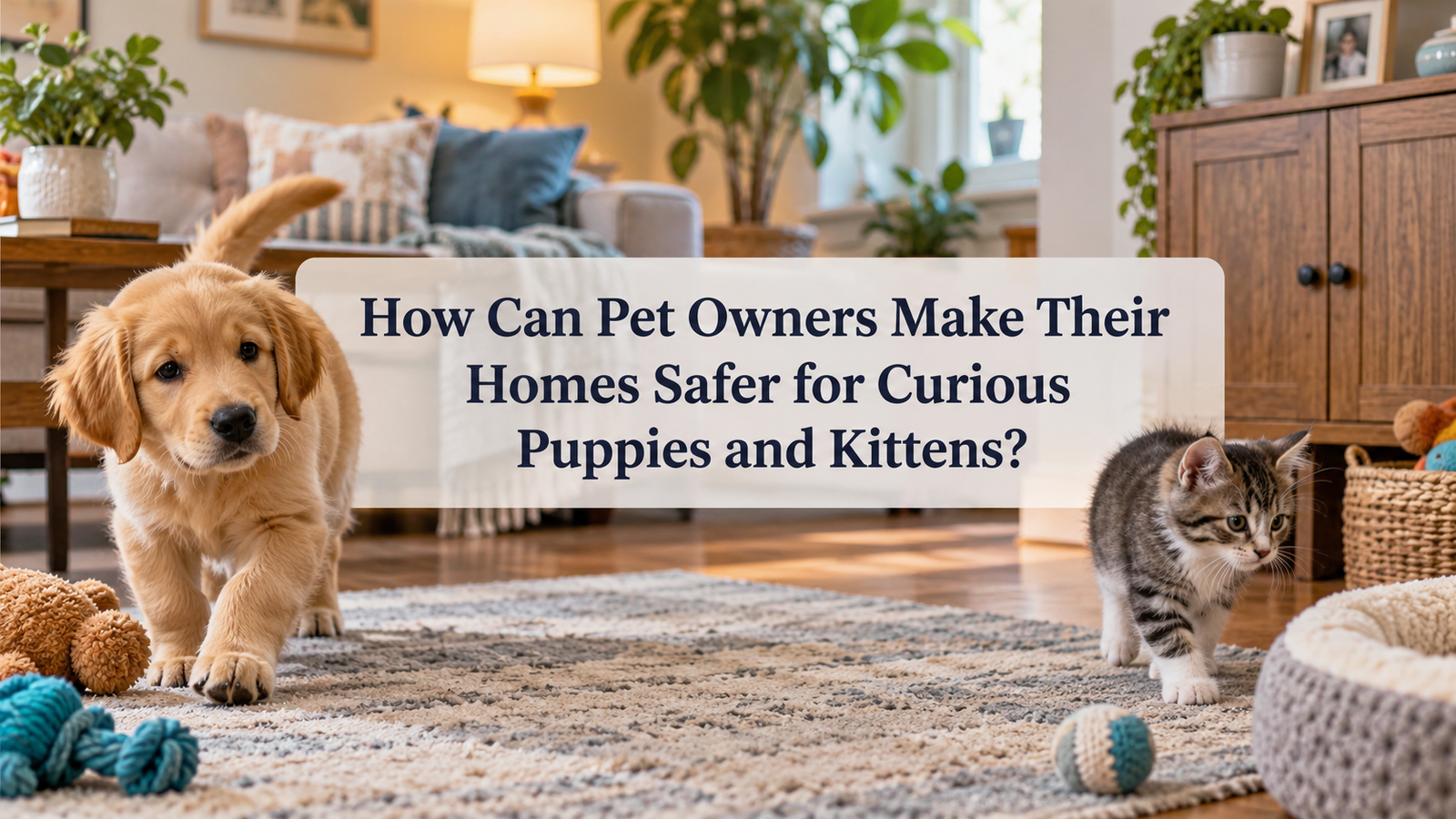
Bringing a puppy or kitten into your home is an exciting experience. These little animals bring happiness, energy, and playful moments into everyday life. However, their natural curiosity can also put them in dangerous situations. Puppies love chewing unfamiliar objects, while kittens enjoy climbing, exploring narrow spaces, and playing with anything that moves. Because of these behaviors, creating a safe home environment is one of the most important responsibilities of a pet owner.
Many ordinary household items can become dangerous for young pets. Electrical wires, cleaning products, medications, small toys, and even certain indoor plants may cause injuries or poisoning. Fortunately, most household accidents can be prevented through careful preparation and regular supervision.
Understanding how to puppy proof and kitten proof your home can help protect your pets while allowing them to explore their surroundings comfortably. A safe environment also gives owners peace of mind and helps young animals develop healthy habits.
Why Is Pet Proofing Your Home Important?
Puppies and kittens explore their surroundings differently from adult animals. Their developing senses encourage them to investigate unfamiliar objects, sounds, and smells.
Puppies often use their mouths to understand their environment. They may chew furniture, shoes, electrical cables, or small household objects without recognizing the danger.
Kittens are naturally attracted to movement and elevated spaces. They may jump onto kitchen counters, climb curtains, or squeeze behind furniture.
These activities are normal parts of their development, but they can expose young pets to unnecessary risks.
Pet proofing your home reduces the chances of accidental injuries, poisoning, choking, and other emergencies. It also creates a comfortable environment where puppies and kittens can learn, play, and grow safely.
1. Keep Electrical Wires and Cables Out of Reach
Electrical cords are among the most overlooked household dangers for curious puppies and kittens.
Young pets may mistake hanging wires for toys. Puppies often chew cables during teething, while kittens may bite or pull dangling cords during play.
Damaged electrical wires can cause burns, electric shocks, and serious injuries.
Pet owners should organize electrical cables and keep them away from areas where pets spend time.
Protective cable covers can help reduce access to exposed wires. Whenever possible, unplug unnecessary electrical devices and store chargers safely.
Avoid leaving phone charging cables, extension cords, and appliance wires hanging near the floor.
Checking cables regularly for bite marks or damage is another useful safety habit.
2. Store Cleaning Products in Secure Cabinets
Most homes contain cleaning products that can be harmful to animals.
Bathroom cleaners, detergents, disinfectants, bleach, and concentrated cleaning liquids may cause poisoning or chemical injuries if swallowed or exposed to the skin.
Curious puppies may investigate bottles left on the floor, while kittens can reach products stored on low shelves.
Keep all household chemicals inside secure cabinets that pets cannot open.
Child resistant cabinet locks can provide additional protection.
Always return cleaning supplies to their storage areas after use. Never leave open containers unattended during household cleaning.
Follow product instructions and keep pets away from treated surfaces until they are safe for animal contact.
Even products advertised as natural should be stored carefully because natural ingredients are not automatically safe for pets.
3. Remove Small Objects That Could Cause Choking
Small household objects can become choking hazards, especially for puppies that enjoy chewing.
Coins, buttons, rubber bands, hair accessories, jewelry, batteries, and small plastic pieces should never be left where young pets can reach them.
Kittens are particularly interested in string, thread, ribbons, and elastic bands.
Swallowing these materials can cause dangerous intestinal blockages.
Sewing supplies should be stored inside closed containers, and children’s toys should be kept in separate areas.
Pet owners should also inspect animal toys for broken or loose pieces.
Choose toys that are appropriate for the pet’s size and age. Replace damaged toys before small pieces become detached.
A simple daily floor inspection can prevent many household accidents.
4. Make the Kitchen a Safer Area
The kitchen contains several potential hazards for puppies and kittens.
Hot cooking surfaces, sharp utensils, food scraps, cleaning chemicals, and accessible trash bins can all create dangerous situations.
Puppies may jump toward food on countertops, while kittens can climb onto surfaces near hot cooking equipment.
Pet owners should keep knives and other sharp objects inside drawers.
Use trash bins with secure lids to prevent animals from investigating discarded food.
Some common human foods, including chocolate, grapes, raisins, onions, garlic, and products containing xylitol, can be toxic to dogs or cats.
Store these foods in secure cupboards or containers.
Keep pets away from hot ovens, boiling liquids, and active stovetops. Establishing kitchen boundaries early can reduce risks as pets become older.
5. Check Indoor Plants Before Bringing Them Home
Indoor plants can improve the appearance of a home, but some varieties are harmful to pets.
Curious kittens may chew leaves or play with hanging plants. Puppies may dig in plant pots and swallow soil or plant material.
Certain plants can cause vomiting, mouth irritation, or more serious poisoning.
Lilies are especially dangerous to cats and can cause severe kidney injury, even with small exposures.
Other potentially harmful plants include sago palms, pothos, and philodendrons.
Before purchasing an indoor plant, verify that it is safe for the animals living in your home.
Remember that placing toxic plants on high shelves does not guarantee safety because kittens are excellent climbers.
Choosing verified pet safe plants is generally the better option.
If you suspect your pet has swallowed a poisonous plant, contact a veterinarian immediately instead of waiting for symptoms.
6. Secure Windows, Balconies, and Staircases
Young animals often underestimate heights and physical obstacles.
Kittens may attempt to jump through open windows while chasing birds or insects. Puppies can accidentally fall down stairs while running or playing.
Install sturdy window screens designed to prevent pets from escaping or falling. Ordinary insect screens may not be strong enough.
Balconies should have secure barriers without gaps that small animals can squeeze through.
Use suitable pet gates to limit access to staircases, especially while puppies are still developing coordination.
Ensure that gates are installed correctly and cannot be pushed over.
Never assume a kitten will avoid a dangerous fall simply because cats are known for their jumping abilities.
7. Create a Comfortable and Safe Sleeping Space
Puppies and kittens need a quiet place where they can rest without disturbance.
A dedicated sleeping area helps young animals feel secure and become familiar with their surroundings.
Choose a location away from electrical cables, household chemicals, heavy foot traffic, and extreme temperatures.
Provide a comfortable pet bed that is easy to clean.
Avoid bedding with loose decorations, exposed filling, or detachable pieces that could be swallowed.
Some puppies benefit from appropriately introduced crate training, while kittens often prefer quiet resting areas with comfortable hiding spaces.
Make sure the sleeping area has suitable ventilation and does not become too hot.
A consistent resting space can also help establish healthy daily routines.
8. Keep Bathrooms and Laundry Areas Secure
Bathrooms and laundry rooms contain several hazards that pet owners may overlook.
Toilet cleaners, medications, laundry detergents, and personal care products should be stored safely.
Keep toilet lids closed, particularly when chemical cleaning products have been used.
Laundry capsules are especially dangerous if pets bite into them.
Washing machines and dryers also require attention. Kittens sometimes climb into open appliances because they are attracted to warm, enclosed spaces.
Always check inside laundry equipment before starting a cycle.
Keep appliance doors closed when they are not being used and prevent pets from entering areas containing hazardous supplies.
These small precautions can greatly improve household safety.
9. Choose Safe Toys and Encourage Healthy Play
Play is essential for the physical and mental development of young pets.
However, not every toy is suitable for puppies and kittens.
Choose products specifically designed for pets and appropriate for their size, age, and chewing habits.
Avoid toys with easily removable decorations, sharp edges, or materials that break into small pieces.
For puppies, durable chew toys can provide a safer alternative to household furniture and shoes.
Kittens may enjoy interactive wands, soft balls, and scratching posts.
String based toys should be used only with supervision and stored away after playtime.
Regularly inspect toys for damage.
Providing appropriate entertainment can also reduce unwanted behaviors caused by boredom.
10. Prevent Access to Dangerous Furniture Spaces
Young pets enjoy exploring hidden spaces beneath beds, behind cabinets, and under sofas.
Unfortunately, these areas sometimes contain exposed wiring, sharp objects, or unstable furniture.
Reclining chairs and adjustable furniture can be particularly dangerous when animals hide underneath moving parts.
Always check for pets before operating these items.
Secure tall bookshelves, televisions, and cabinets to prevent accidental tipping.
Keep heavy decorations away from edges where they may fall.
Block access to dangerous gaps when necessary, while providing safe hiding spaces for kittens.
A well organized home allows pets to explore without encountering avoidable hazards.
11. Protect Pets From Open Doors and Outdoor Escapes
Puppies and kittens can move surprisingly quickly when they notice an open door.
An unexpected escape may expose them to traffic, unfamiliar animals, or other outdoor dangers.
Check that entrance doors, gates, and fences close securely.
Consider using a pet barrier near frequently opened doors.
Teach puppies basic commands such as stay and come through positive reinforcement.
Kittens should have secure indoor environments and carefully managed outdoor access.
Identification tags and microchips can improve the chances of reunification if a pet escapes.
Keeping microchip contact information updated is equally important.
12. Keep Medications and Personal Products Away
Human medications can be extremely dangerous for puppies and kittens.
Painkillers, vitamins, prescription medicines, and other tablets should always be stored in secure containers.
Never leave medicine on bedside tables, kitchen counters, or bathroom shelves.
Some human pain medications can cause severe poisoning in pets, even in relatively small amounts.
Personal care products such as essential oils, perfumes, and certain cosmetics may also present risks.
Do not give a pet human medication unless a veterinarian specifically directs you to do so.
If accidental ingestion occurs, contact a veterinarian or animal poison service immediately.
How Can Pet Owners Maintain a Safe Home Every Day?
Pet proofing is not something owners complete only once. Puppies and kittens develop new abilities as they grow.
A young kitten that previously stayed on the floor may soon begin climbing shelves. A puppy that ignored shoes may start chewing them during teething.
Regular household inspections help identify new hazards.
Pet owners should observe which areas attract their animals and make adjustments when necessary.
Keep floors free of small objects, store dangerous products securely, and examine toys regularly.
Supervision is especially important during the first few months in a new home.
When direct supervision is not possible, use a properly prepared, pet safe room or enclosed area with access to appropriate necessities.
This approach allows young animals to remain comfortable while reducing preventable accidents.
Frequently Asked Questions
What Is the First Step in Puppy Proofing a Home?
Start by inspecting the house from your puppy’s height. Remove small objects, secure electrical cables, store chemicals safely, and block access to dangerous areas. Preparing one safe room before bringing your puppy home is a practical starting point.
How Can I Make My Home Safe for a New Kitten?
Focus on securing windows, removing toxic plants, storing strings and small objects, and checking hidden spaces. Provide safe climbing furniture, scratching posts, and a comfortable resting area to encourage healthy exploration.
Should Puppies and Kittens Have Access to Every Room?
Not immediately. Limiting access to prepared areas can make supervision easier and reduce accidents. As pets mature and develop safe habits, owners can gradually introduce additional rooms.
What Should I Do If My Pet Swallows a Household Object?
Contact a veterinarian promptly, even if your pet initially appears normal. Some swallowed objects can cause choking or intestinal obstruction. Do not attempt to induce vomiting unless specifically instructed by a veterinary professional.
Conclusion
Making your home safer for curious puppies and kittens requires preparation, awareness, and consistent attention. Everyday objects such as electrical wires, cleaning products, small toys, indoor plants, and medications can become dangerous when young pets explore their surroundings.
By removing hazards, securing risky areas, providing suitable toys, and supervising daily activities, pet owners can create a welcoming environment that supports healthy development.
The goal of pet proofing is not to stop puppies and kittens from exploring. It is to make exploration safer. A carefully prepared home allows young pets to learn, play, rest, and grow while giving their owners greater confidence in their everyday care.