Taking care of a pet involves much more than providing food, water, and a comfortable place to sleep. Eye care is another important responsibility that pet owners should include in their daily routine. Healthy eyes allow dogs and cats to explore their surroundings, recognize movement, play confidently, and enjoy everyday activities. However, dust, dirt, infections, injuries, and certain health conditions can affect their eyes.
Learning how to keep pets’ eyes clean and healthy can help owners notice problems early and prevent minor irritation from becoming more serious. Fortunately, basic pet eye care does not require complicated equipment or expensive products. Gentle cleaning, regular observation, proper grooming, and timely veterinary attention can make a meaningful difference.
This guide explains practical methods for maintaining healthy eyes in dogs and cats, recognizing common eye problems, and creating a safe eye care routine at home.
Why Is Eye Care Important for Pets?
A pet’s eyes are delicate organs that need protection from environmental irritants and injuries. Just like humans, animals rely on their eyes to understand their surroundings and respond to potential dangers.
Dogs use their vision to follow moving objects, navigate unfamiliar areas, and interact with people. Cats depend on their eyes for hunting behavior, climbing, and moving confidently in different lighting conditions.
When a pet develops an eye problem, even simple activities may become uncomfortable.
Regular eye care helps owners maintain cleanliness around the eyes and recognize unusual changes before they become serious.
Healthy eyes also contribute to a pet’s comfort and overall quality of life. Although cleaning cannot prevent every eye disease, good hygiene and early detection are valuable parts of responsible pet ownership.
What Do Healthy Pet Eyes Look Like?
Before cleaning a pet’s eyes, owners should understand what normal eyes look like.
Healthy eyes are generally clear, comfortable, and free from excessive discharge. The surrounding skin should not appear unusually swollen or irritated.
Some pets naturally produce small amounts of dried material near the corners of their eyes, especially after sleeping. This is often normal when the discharge is minimal and the pet shows no signs of discomfort.
However, the following characteristics usually indicate healthy eyes:
- Clear surfaces without unusual cloudiness
- Little or no excessive discharge
- No persistent redness or swelling
- Comfortable blinking without frequent squinting
- No repeated rubbing or scratching
- Normal behavior and movement
Every pet is different, so owners should become familiar with their animal’s usual eye appearance.
A noticeable change from normal deserves attention.
How Can Pet Owners Clean Their Pet’s Eyes Safely?
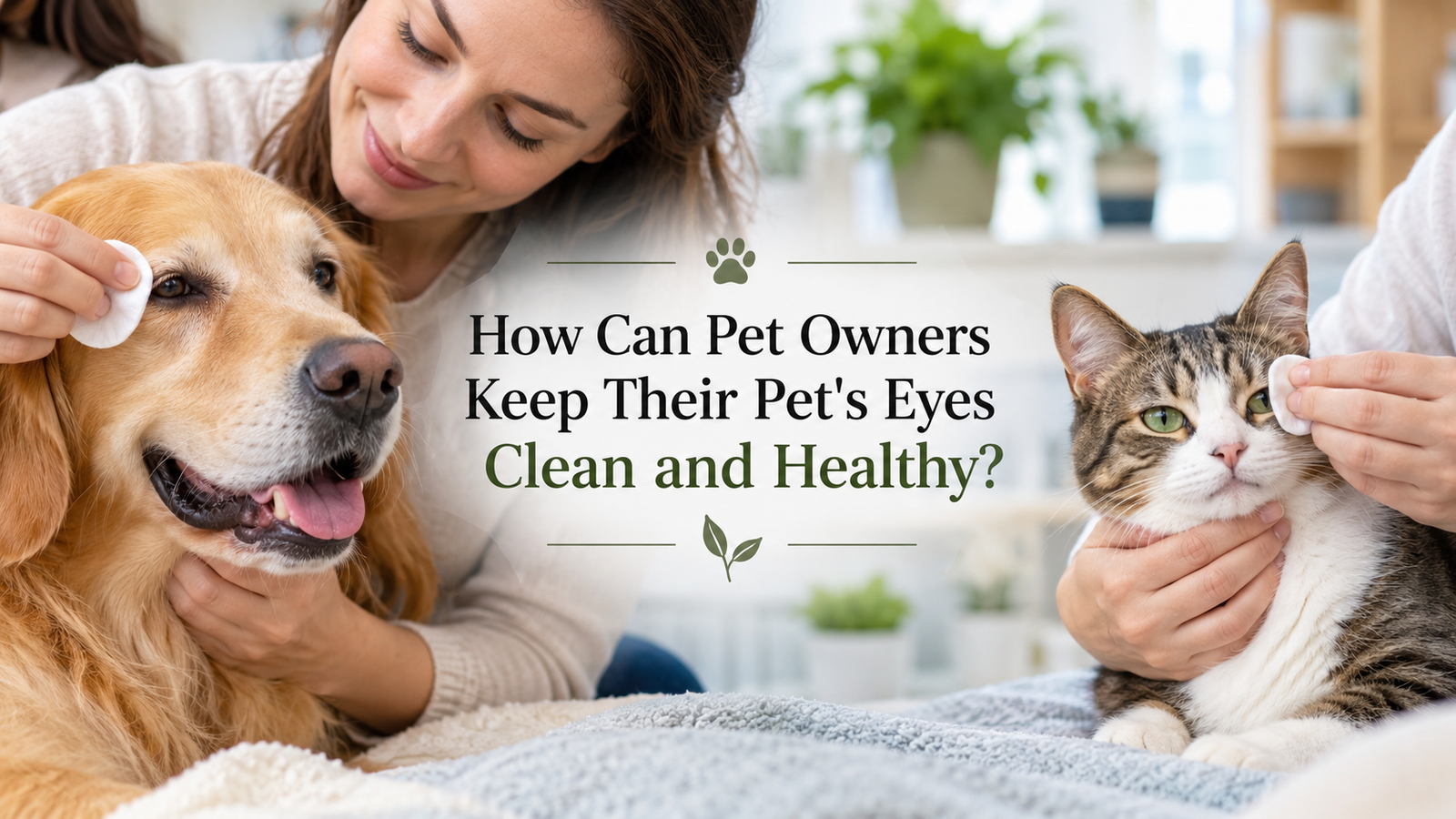
Cleaning a pet’s eyes requires patience and gentle handling. The goal is to remove dirt and discharge from the surrounding area without touching or damaging the sensitive surface of the eye.
The safest method involves using clean materials and avoiding unnecessary pressure.
Use a Soft and Clean Cloth
A soft, lint free cloth or sterile gauze is useful for removing ordinary dirt around a pet’s eyes.
Moisten the material with sterile saline intended for eye rinsing or a veterinarian recommended pet eye cleaning solution.
Gently wipe away discharge from the surrounding fur and skin without rubbing the eyeball.
If dried material is difficult to remove, hold the damp cloth against the affected fur briefly to soften it.
Never pull hardened discharge away forcefully because this may irritate the skin.
Clean Each Eye Separately
Always use separate clean pieces of gauze or different sections of a cloth for each eye.
This simple habit helps reduce the chance of transferring germs or irritating material from one eye to the other.
It is particularly important when one eye appears irritated or produces more discharge than usual.
Avoid Direct Pressure
The eye itself is extremely sensitive.
Cleaning should focus on the surrounding skin, eyelids, and fur rather than the surface of the eyeball.
Never press, scrub, or attempt to remove material that appears attached to the eye.
If something seems stuck on the eye’s surface, seek veterinary assistance.
How Often Should Pet Owners Clean Their Pet’s Eyes?
There is no single cleaning schedule that works for every animal.
Some dogs and cats rarely develop visible discharge, while others require regular attention because of their facial structure, coat length, or natural tear production.
For pets with clean and comfortable eyes, daily observation may be enough.
Animals that frequently develop tear stains or collect mild discharge around their eyes may benefit from gentle cleaning when needed.
Long haired breeds sometimes need more frequent grooming around the eye area.
However, excessive cleaning can irritate sensitive skin. Pet owners should avoid wiping the eyes repeatedly when there is no reason to do so.
The best approach is to check the eyes daily and clean the surrounding area only when necessary.
What Causes Eye Discharge in Dogs and Cats?
Eye discharge is one of the most common concerns among pet owners.
A small amount of clear or slightly dried discharge can occur naturally. Tears help protect the eyes by removing dust and keeping the surface moist.
However, unusual discharge may indicate an underlying problem.
Possible causes include environmental irritation, allergies, blocked tear drainage, infections, eyelid abnormalities, and injuries.
Discharge that becomes thick, yellow, green, bloody, or unusually heavy deserves veterinary evaluation.
Owners should also pay attention to discharge affecting only one eye, especially when accompanied by squinting or redness.
Although cleaning may remove visible material, it does not treat the underlying cause.
Persistent discharge should never be ignored.
How Can Pet Owners Prevent Tear Stains?
Tear stains often appear as reddish brown marks beneath the eyes, particularly in dogs with light colored coats.
These marks develop when tears repeatedly wet the surrounding fur.
Certain breeds may experience more visible staining because of facial structure, hair growth, or tear drainage differences.
Keeping the fur clean and dry can help reduce staining.
Owners should gently remove accumulated moisture using a clean, soft cloth.
Regular grooming may also prevent hair from trapping tears near the eyes.
However, persistent or excessive tearing should be examined by a veterinarian because blocked tear ducts, eyelid problems, and eye irritation may be responsible.
Avoid bleaching products, harsh stain removers, or homemade chemical mixtures around a pet’s eyes.
Improving cleanliness is safer than trying to remove stains aggressively.
Why Is Grooming Around the Eyes Important?
Pets with long facial hair may experience irritation when loose strands repeatedly touch their eyes.
Hair can also trap dust, moisture, and debris.
Breeds with long coats or prominent facial hair may need additional grooming to maintain comfortable vision.
Regular brushing helps keep surrounding fur clean and reduces matting.
If hair grows directly toward the eyes, professional trimming may be necessary.
Pet owners should be especially careful when using scissors near an animal’s face.
Sudden movements can result in serious injuries.
For nervous animals or pets with difficult facial grooming needs, an experienced groomer or veterinarian is usually the safest choice.
Good grooming supports eye hygiene without requiring unnecessary contact with the eyes.
How Can Dust and Environmental Irritants Affect Pet Eyes?
Environmental conditions play an important role in pet eye health.
Dust, smoke, strong fragrances, cleaning chemicals, and airborne particles may irritate sensitive eyes.
Dogs that travel with their heads outside moving car windows may be exposed to flying debris and potential injuries.
Similarly, pets living in dusty surroundings may develop temporary irritation or watery eyes.
Owners can reduce exposure by keeping living spaces reasonably clean and using pet safe household products.
Avoid spraying perfume, deodorant, or cleaning chemicals near animals.
During household cleaning, keep pets away from strong fumes and irritating substances.
If a pet develops redness, discomfort, or excessive tearing after exposure, veterinary advice may be necessary.
Protecting pets from environmental hazards is an important part of preventive eye care.
What Are the Common Signs of Eye Problems in Pets?
Recognizing early symptoms allows owners to respond before a condition becomes more serious.
Eye problems can develop suddenly, and some may threaten vision if treatment is delayed.
Common warning signs include:
- Persistent redness or swelling
- Excessive watering or unusual discharge
- Frequent blinking or squinting
- Rubbing the face against furniture
- Pawing repeatedly at the eyes
- Cloudiness or visible changes in the eye
- Sensitivity to bright light
- Difficulty navigating familiar surroundings
- One eye appearing different from the other
A pet that keeps an eye closed, develops sudden cloudiness, experiences an injury, or shows signs of vision loss needs urgent veterinary attention.
Eye pain should never be treated as a minor grooming problem.
Can Pets Develop Eye Infections?
Dogs and cats can develop eye infections caused by bacteria, viruses, and other organisms.
Some infections affect the conjunctiva, which is the tissue lining the eyelids and covering parts of the eye.
Possible symptoms include redness, swelling, discharge, and discomfort.
However, similar symptoms may also occur with allergies, scratches, dry eye, or more serious conditions.
Because these problems can look alike, owners should not attempt to diagnose an infection based on appearance alone.
Veterinarians may examine the eye and perform tests to identify the cause.
Treatment depends on the diagnosis and may include prescribed medication.
Never use leftover eye drops or human medications without veterinary approval.
Some products, especially those containing steroids, can make certain eye injuries or infections significantly worse.
How Does Proper Nutrition Support Healthy Eyes?
A balanced diet contributes to many aspects of a pet’s health, including normal eye function.
Nutrients such as vitamin A, essential fatty acids, and appropriate dietary antioxidants support normal tissues and bodily processes.
However, nutritional requirements differ between dogs and cats.
Cats, for example, have specific dietary needs that must be met through properly formulated food.
Providing a complete and balanced diet appropriate for the animal’s species and life stage is generally the best approach.
Pet owners should avoid giving vitamin supplements without professional guidance.
Excessive amounts of certain nutrients can be harmful.
Nutrition supports eye health, but it cannot replace veterinary treatment for infections, injuries, or inherited eye diseases.
Why Are Regular Veterinary Checkups Important?
Routine veterinary examinations provide an opportunity to identify eye problems that may not be obvious at home.
Some conditions develop gradually and initially produce few noticeable symptoms.
Veterinarians can examine the eyes, eyelids, pupils, and surrounding tissues for abnormalities.
When necessary, they may perform additional tests to measure tear production, check eye pressure, or detect surface injuries.
Older pets may be more likely to develop certain eye conditions, including cataracts and glaucoma.
Animals with inherited eye problems or unusual facial structures may also require closer monitoring.
Regular examinations help owners understand their pet’s individual risks.
Early diagnosis may improve treatment options and protect comfort and vision.
What Should Pet Owners Avoid When Cleaning Eyes?
Several common cleaning mistakes can make eye problems worse.
Using inappropriate products is particularly risky because the eye surface is sensitive to chemicals and contamination.
Pet owners should avoid using soap, shampoo, alcohol, essential oils, or household disinfectants around the eyes.
Human redness relief drops and medicated eye products should not be used unless prescribed by a veterinarian.
Homemade herbal mixtures and unsterile rinses may introduce additional irritation or germs.
Cotton materials that shed loose fibers should also be avoided near the eye surface.
Another important mistake is delaying veterinary care while repeatedly cleaning an irritated eye.
Cleaning is helpful for ordinary hygiene, but redness, pain, persistent discharge, or cloudiness requires professional assessment.
How Can Pet Owners Make Eye Cleaning Less Stressful?
Some animals dislike having their faces touched.
A calm approach can make the cleaning process easier for both pets and owners.
Choose a quiet area where the animal feels comfortable.
Allow the pet to smell the cleaning materials before beginning.
Start with gentle touches around the head and face, rewarding calm behavior with praise or a suitable treat.
Keep cleaning sessions short and avoid forcing the animal to remain still when it becomes frightened.
For puppies and kittens, gradual introduction to facial handling can help establish positive habits.
Consistency is more effective than restraint or punishment.
If the animal becomes aggressive, extremely anxious, or painful during handling, stop and seek professional assistance.
How Can Owners Protect Their Pet’s Eyes During Outdoor Activities?
Outdoor environments expose pets to additional hazards such as branches, insects, dust, and flying particles.
Dogs running through dense vegetation may accidentally injure their eyes.
Owners should supervise outdoor activities and avoid areas containing sharp debris whenever possible.
During travel, pets should remain safely secured inside vehicles rather than placing their heads outside windows.
After walks, owners can inspect the face for dirt, redness, or unusual discharge.
If an animal suddenly begins squinting or rubbing its eyes after outdoor activity, an injury or foreign object may be present.
Do not attempt to remove an embedded object.
Prompt veterinary examination is the safest response.
Conclusion
Keeping a pet’s eyes clean and healthy is an important part of everyday animal care. Simple practices such as gentle cleaning, regular grooming, balanced nutrition, and protection from environmental irritants can help maintain comfort and good hygiene.
Pet owners should inspect their animals’ eyes regularly and become familiar with their normal appearance. Changes such as redness, excessive discharge, swelling, squinting, or cloudiness may indicate problems that require veterinary attention.
The most effective pet eye care routine combines careful home hygiene with regular veterinary examinations. Rather than relying on harsh cleaning products or unnecessary treatments, owners should focus on gentle handling and early recognition of unusual symptoms.
With consistent attention and appropriate professional care, dogs and cats have a better chance of maintaining comfortable, healthy eyes throughout their lives.