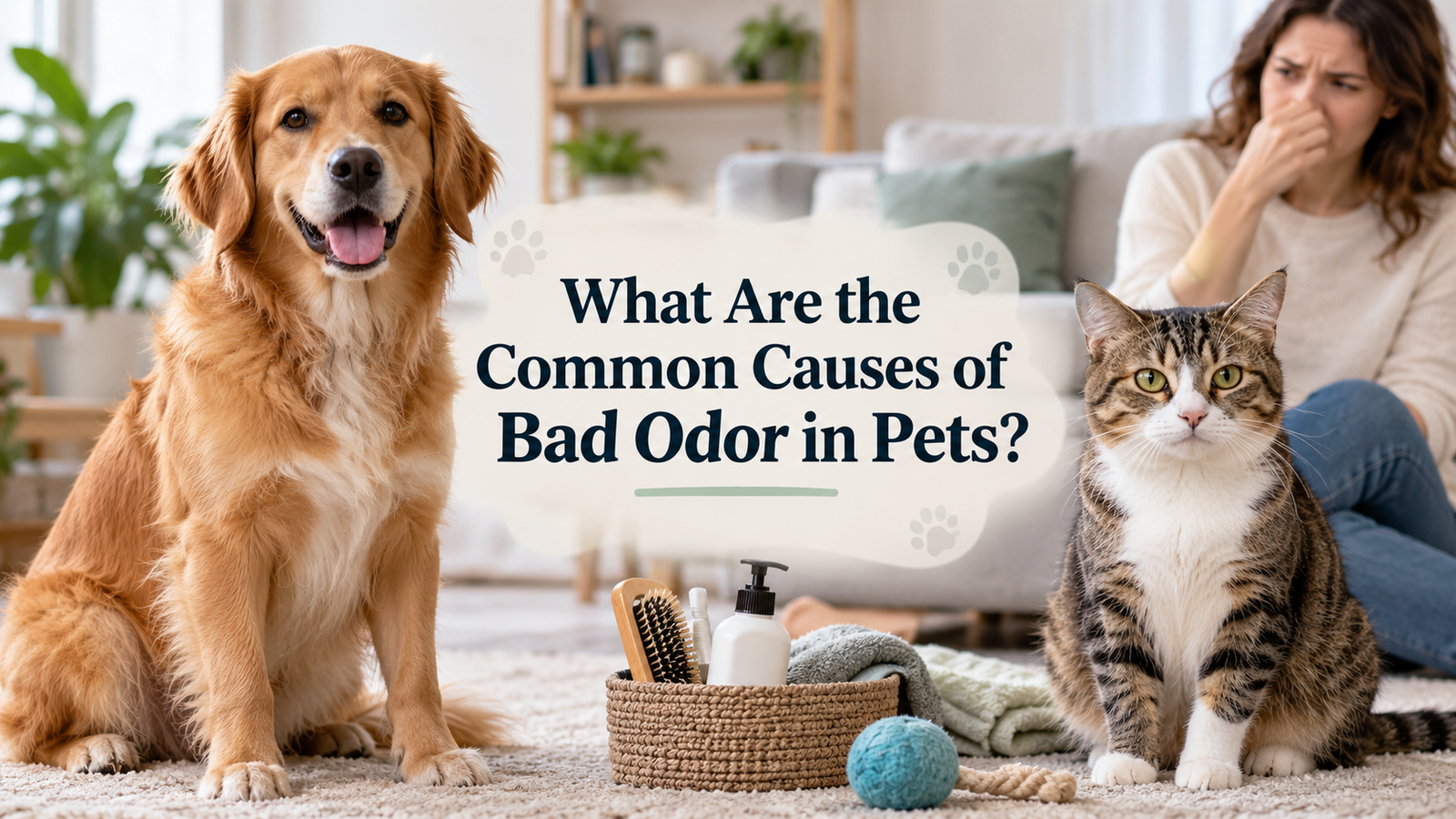
Pets bring happiness, comfort, and companionship into our homes. Whether you have a playful dog or a loving cat, keeping your pet clean and healthy is an important responsibility. However, many pet owners notice an unpleasant smell coming from their animals at some point. While a mild natural body odor is normal, a strong or unusual smell may indicate poor hygiene or an underlying health problem.
Understanding the common causes of bad odor in pets can help owners maintain better hygiene and recognize health concerns early. Unpleasant smells may develop because of skin infections, dental problems, dirty ears, poor grooming habits, or digestive issues.
Some odors are temporary and disappear after proper cleaning, while others require veterinary attention. Learning where these smells come from is the first step toward keeping pets comfortable and healthy.
Why Do Pets Develop Unpleasant Body Odors?
Every animal has a natural body scent. Dogs and cats produce oils that protect their skin and maintain healthy fur. These natural oils usually create a mild smell that is not harmful.
However, when moisture, dirt, bacteria, or yeast accumulate on the body, the smell may become stronger.
Pets that spend considerable time outdoors may develop noticeable odors because of exposure to mud, dirty water, and other environmental materials. Indoor pets can also develop unpleasant smells when their grooming needs are neglected.
Sometimes, the source of the odor is not immediately visible. Problems involving the mouth, ears, skin, or anal glands may produce strong smells even when the pet appears clean.
Identifying the source is important because bathing alone cannot resolve every cause of pet odor.
1. Poor Grooming and Lack of Regular Bathing
One of the most common causes of bad odor in pets is poor grooming.
Dogs naturally collect dust, dirt, and environmental particles while playing, walking, and exploring. When these materials remain trapped in their coats, unpleasant smells may develop.
Pets with thick or long fur may require additional grooming because their coats can hold moisture and debris.
Regular brushing removes loose hair, dirt, and dead skin cells. It also helps distribute natural oils across the coat.
Dogs may need occasional bathing with a shampoo specifically formulated for their skin. However, excessive bathing can remove protective oils and cause dryness or irritation.
Cats generally clean themselves through grooming, so most healthy cats do not require routine baths. Older cats, overweight cats, and animals with mobility problems may need assistance maintaining clean fur.
A consistent grooming routine can significantly reduce unwanted pet odors.
2. Dental Problems and Bad Breath
Dental disease is another major reason pets develop unpleasant smells.
Bad breath in dogs and cats may result from plaque accumulation, tartar formation, gum inflammation, or infected teeth.
Food particles and bacteria gradually collect on tooth surfaces. Without proper dental care, plaque can harden into tartar and contribute to periodontal disease.
Common signs of dental problems include:
- Persistent bad breath
- Red or swollen gums
- Yellow or brown deposits on teeth
- Difficulty chewing food
- Excessive drooling
- Reduced interest in eating
Pet owners should examine their animal’s mouth regularly when it is safe to do so.
Brushing with pet safe toothpaste helps control plaque. Human toothpaste should never be used because some ingredients can harm animals.
Professional dental examinations and cleaning may also be necessary.
Persistent bad breath should not be ignored because dental disease can cause significant pain and infection.
3. Ear Infections and Dirty Ears
Ear infections frequently produce unpleasant odors, particularly in dogs.
The ear canal provides an environment where moisture, wax, bacteria, and yeast may accumulate.
Dogs with floppy ears, allergies, or frequent exposure to water may have an increased risk of ear problems.
Common symptoms include head shaking, repeated scratching, ear redness, unusual discharge, and a strong smell coming from the ears.
A healthy ear generally should not produce a powerful unpleasant odor.
Pet owners should inspect their pet’s ears regularly and keep them dry after swimming or bathing.
Cleaning should only be performed with a veterinarian recommended ear solution when needed. Cotton swabs should not be inserted deep into the ear canal.
If the ears smell strongly or appear inflamed, veterinary examination is important because different infections require different treatments.
4. Skin Infections and Excessive Oil Production
Skin problems can create noticeable body odors in pets.
Healthy skin provides protection against environmental organisms. However, allergies, injuries, parasites, or excessive moisture may disturb the skin’s natural balance.
Bacteria and yeast can multiply when conditions become favorable, producing a strong or unusual smell.
Some pets develop greasy skin, redness, itching, or patches of hair loss.
Common signs of skin infections include:
- Persistent scratching or licking
- Red or irritated skin
- Greasy or sticky fur
- Unpleasant body odor
- Hair thinning or bald patches
- Scabs or damaged skin
Skin folds are particularly vulnerable because moisture can become trapped between them.
Dogs with facial wrinkles or other skin folds may require careful cleaning and drying.
Treating the underlying cause is essential. Repeated bathing without addressing an infection or allergy may provide only temporary improvement.
5. Anal Gland Problems
Anal gland problems are another common source of strong odors in dogs and occasionally cats.
Dogs have two small scent glands located near the anus. These glands normally release small amounts of fluid during bowel movements.
When the glands become blocked, inflamed, or infected, they may produce a powerful fishy smell.
Some pets drag their rear ends across the floor, repeatedly lick the area, or appear uncomfortable when sitting.
Other signs include swelling, pain, or discharge near the anus.
Pet owners should not attempt to squeeze infected or painful anal glands at home.
A veterinarian can examine the glands and determine whether treatment is necessary.
A persistent fishy odor should be investigated, especially when accompanied by pain or swelling.
6. Wet Fur and Trapped Moisture
Wet fur often develops a distinctive smell, especially in dogs.
When a pet becomes wet, moisture can release odor producing compounds associated with microorganisms and natural materials present on the coat.
This explains why dogs may smell stronger after swimming, walking in the rain, or taking a bath.
The smell usually decreases once the coat becomes completely dry.
However, moisture trapped close to the skin can also encourage irritation and microbial growth.
Pets with thick coats require careful drying after bathing.
A clean towel and a pet appropriate dryer on a safe setting may help remove excess moisture.
Particular attention should be given to the paws, ears, and skin folds.
Keeping the coat dry is an important part of preventing persistent pet odors.
7. Digestive Problems and Excessive Gas
Digestive issues can contribute to unpleasant smells around pets.
Occasional gas is normal, but frequent or unusually strong flatulence may indicate dietary intolerance, sudden food changes, or digestive problems.
Some animals develop gas after consuming unfamiliar foods or eating too quickly.
Poorly digestible ingredients may also contribute to excessive fermentation in the intestines.
Pet owners can support digestive health by providing a balanced diet appropriate for their animal’s age and nutritional requirements.
Changes in food should generally be introduced gradually.
If excessive gas occurs alongside diarrhea, vomiting, abdominal discomfort, or weight loss, veterinary advice is necessary.
Persistent digestive problems should not be treated simply by changing foods repeatedly without identifying the cause.
8. Dirty Bedding and Living Areas
Sometimes, an unpleasant smell associated with a pet actually comes from its surroundings.
Pet beds, blankets, carpets, toys, and sleeping areas collect hair, skin oils, saliva, and dirt.
When these materials are not cleaned regularly, they can develop persistent odors.
A pet lying on dirty bedding may transfer those smells back onto its coat.
Washing pet bedding according to the manufacturer’s instructions helps maintain a cleaner environment.
Food bowls should be washed regularly, and water containers should be refreshed daily.
Litter boxes also require consistent maintenance.
For cats, removing waste frequently and replacing litter as needed can help control household odors.
A clean living environment supports both pet hygiene and overall household comfort.
9. Urinary Problems and Poor Hygiene
Urine has a noticeable smell, but unusually strong odors around a pet may sometimes indicate a health or hygiene issue.
Urine can become trapped in the fur around the rear legs, abdomen, or genital area.
This problem may occur in older pets, animals with mobility difficulties, or pets experiencing urinary incontinence.
Dirty fur can cause skin irritation and unpleasant smells.
Changes in urine odor may also occur with dehydration, urinary tract problems, or other medical conditions, although smell alone cannot establish a diagnosis.
Warning signs include frequent urination, straining, blood in the urine, or accidents inside the house.
A pet that cannot pass urine needs immediate veterinary attention.
Keeping the affected fur clean and dry may reduce odors, but persistent urinary symptoms require medical evaluation.
10. Poor Diet and Nutritional Imbalance
Diet plays an important role in maintaining healthy skin, digestion, and coat condition.
Pets require balanced nutrition that provides suitable amounts of protein, fats, vitamins, and minerals.
A poorly balanced diet may contribute to skin problems, digestive disturbances, or reduced coat quality.
Food allergies can also cause itching and inflammation, sometimes leading to secondary skin or ear infections that produce odors.
However, an unpleasant smell does not automatically mean that a pet’s food is unsuitable.
Owners should avoid making unnecessary dietary changes based only on body odor.
Choosing complete and balanced pet food appropriate for the animal’s species and life stage can support general health.
When a food allergy is suspected, a veterinarian may recommend a structured dietary trial to identify the problem.
How Can Pet Owners Prevent Bad Odor Naturally?
Preventing unpleasant smells begins with understanding a pet’s daily hygiene needs.
Regular grooming helps remove loose fur and dirt before they accumulate.
Dental brushing, routine ear inspections, and proper coat maintenance can also reduce common sources of odor.
Owners should ensure pets have access to fresh drinking water and receive a balanced diet.
Living areas should remain clean, dry, and properly ventilated.
Outdoor activities are important for physical and mental health, but pets should be checked for mud, moisture, and debris afterward.
It is also important to avoid using strong perfumes, household disinfectants, essential oils, or human deodorants directly on animals.
Some products can irritate their skin or cause poisoning.
The safest approach is to identify and address the actual source of the smell rather than cover it with fragrance.
When Should Pet Owners Visit a Veterinarian?
Although many pet odors result from ordinary hygiene issues, some indicate medical conditions.
A veterinary appointment is recommended when an odor appears suddenly, becomes unusually strong, or continues despite appropriate grooming.
Additional warning signs include:
- Persistent itching or skin redness
- Strong ear odor with discharge
- Severe bad breath or difficulty eating
- Unusual swelling near the anus
- Frequent vomiting or diarrhea
- Changes in urination
- Open wounds or signs of infection
- Unexplained weight loss or reduced activity
Difficulty breathing, inability to urinate, or severe weakness requires urgent veterinary care.
Early examination helps identify underlying problems before they become more serious.
Frequently Asked Questions About Bad Odor in Pets
Why does my dog smell bad even after bathing?
A dog may continue smelling unpleasant after bathing because of an ear infection, dental disease, skin infection, or anal gland problem. If the odor persists after the coat is completely dry, a veterinary examination may be needed.
Why does my cat suddenly have a bad smell?
A sudden unpleasant smell in cats may be associated with dental problems, infected wounds, dirty fur, urinary issues, or difficulties with self grooming. An unexplained new odor should be investigated.
Can pet food cause body odor?
Diet can sometimes contribute indirectly to body odor through digestive problems, skin disease, or food allergies. However, persistent odors should not automatically be blamed on food.
Is it normal for pets to have a natural smell?
Yes. Dogs and cats have natural body scents. A mild smell is generally normal, but a strong, persistent, or unusual odor may suggest a hygiene or medical problem.
How often should pets be groomed to prevent odors?
Grooming frequency depends on the animal’s species, breed, coat type, lifestyle, and health. Regular brushing is beneficial for many pets, while bathing schedules should be based on individual needs.
Conclusion
Understanding the common causes of bad odor in pets helps owners provide better daily care and recognize possible health problems.
Poor grooming, dental disease, ear infections, skin conditions, anal gland problems, and dirty living environments are among the most frequent reasons pets develop unpleasant smells.
Many odors can be reduced through regular brushing, appropriate bathing, dental hygiene, balanced nutrition, and clean bedding.
However, persistent or unusual smells should never be ignored, particularly when accompanied by itching, pain, discharge, or changes in behavior.
By maintaining good hygiene and arranging regular veterinary checkups, pet owners can help their dogs and cats stay clean, comfortable, and healthy throughout their lives.