
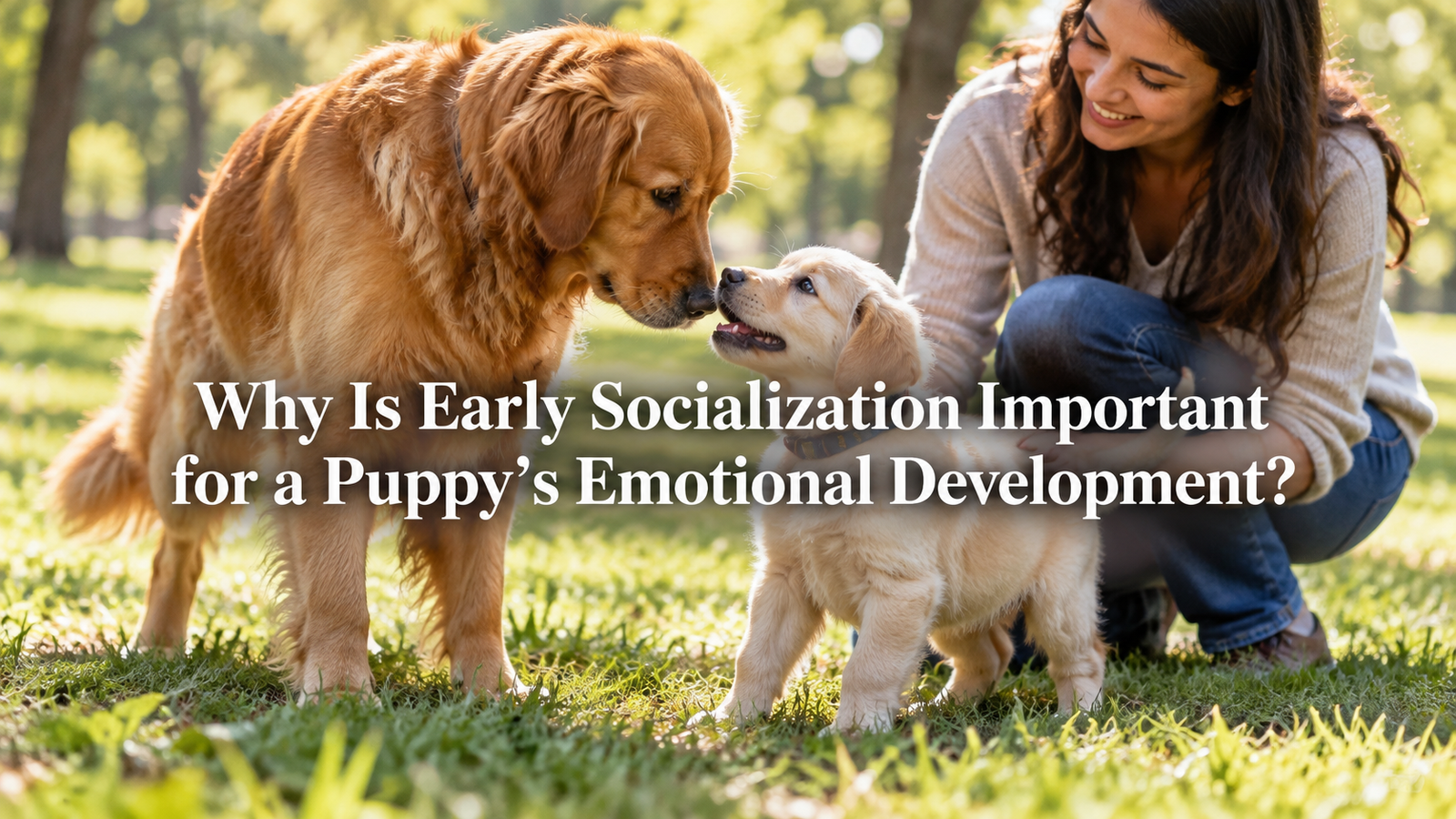
Bringing a new puppy into the home is an exciting experience. Puppies are naturally curious, playful, and eager to explore their surroundings. However, their early experiences can strongly influence how they behave and respond to different situations throughout their lives. One of the most important responsibilities of a puppy owner is providing proper socialization during the early stages of development.
Early puppy socialization plays an essential role in emotional development, confidence, behavior, and overall well-being. It helps puppies become familiar with people, animals, sounds, environments, and everyday experiences. When socialization is handled carefully, puppies are more likely to develop positive emotional responses and feel comfortable in unfamiliar situations.
Understanding why early socialization matters can help pet owners raise emotionally healthy, confident, and well-adjusted dogs.
What Is Early Puppy Socialization?
Early puppy socialization is the process of introducing a young puppy to different experiences in a safe, controlled, and positive way. These experiences may include meeting people, observing other animals, hearing household noises, exploring new environments, and becoming familiar with everyday activities.
Socialization does not simply mean allowing puppies to play with other dogs. It involves helping them understand that unfamiliar situations are not necessarily dangerous.
For example, a puppy that regularly hears a vacuum cleaner from a comfortable distance may gradually become familiar with its sound. Similarly, a puppy that has positive interactions with different people may feel more comfortable meeting visitors later in life.
The main purpose of socialization is to build positive emotional associations rather than force a puppy to accept uncomfortable situations.
Every puppy develops at a different pace. Therefore, socialization should always consider the animal’s personality, health, and comfort level.
Why Is the Early Socialization Period Important?
A puppy’s brain develops rapidly during the first few months of life. During this time, puppies are especially receptive to learning about their surroundings.
The primary socialization period generally occurs between approximately 3 and 14 weeks of age, although the exact timing varies between individual puppies.
During this stage, positive experiences can influence how puppies respond to people, animals, and environmental changes.
A puppy that experiences a variety of safe situations may learn that unfamiliar things can be normal and manageable.
In contrast, a puppy with limited exposure to everyday experiences may become more cautious or fearful when encountering something unfamiliar.
Early socialization does not guarantee that a dog will never develop behavioral problems. Genetics, health, training, and later experiences also influence emotional development.
However, positive early experiences provide an important foundation for emotional confidence.
How Does Early Socialization Build Confidence in Puppies?
Confidence is one of the most valuable benefits of early puppy socialization.
A confident puppy is generally more willing to explore unfamiliar environments and recover from minor surprises.
For example, imagine two puppies encountering a person carrying an umbrella.
One puppy has previously experienced different objects, people, and environments through positive introductions. It may approach the umbrella with curiosity.
Another puppy has rarely encountered unfamiliar objects. It may hesitate, hide, or bark because the experience feels overwhelming.
These reactions do not mean one puppy is better than the other. They simply demonstrate how previous experiences can influence emotional responses.
Pet owners can build confidence by introducing puppies to new experiences gradually.
Allowing puppies to explore at their own pace helps them develop trust in their surroundings. Gentle encouragement, praise, and small rewards can make unfamiliar situations more enjoyable.
Over time, these positive experiences can support greater emotional confidence.
How Does Socialization Help Reduce Fear and Anxiety?
Fear is a natural protective response in animals. However, excessive fear can interfere with a dog’s ability to enjoy everyday activities.
Early socialization helps puppies become familiar with common experiences before those experiences become strongly associated with fear.
Household appliances, traffic sounds, visitors, bicycles, and unfamiliar surfaces are examples of things puppies may encounter.
When introduced carefully, these experiences can become ordinary parts of daily life.
For instance, playing a recording of traffic sounds at a low volume while a puppy enjoys a treat may help create a positive association.
The volume can be adjusted gradually as long as the puppy remains relaxed.
Owners should never force frightened puppies to approach something that makes them uncomfortable.
Successful puppy socialization focuses on positive experiences, not repeated exposure to stressful situations.
If a puppy consistently displays intense fear, a veterinarian or qualified behavior professional can recommend an appropriate approach.
Why Is Socialization Important for Healthy Relationships With People?
Puppies need opportunities to become comfortable around different types of people.
During early socialization, a puppy may encounter adults, children, older people, and individuals wearing different clothing or accessories.
These experiences can help puppies understand that people may look, move, and sound different.
Positive human interactions also support the development of trust.
For example, a visitor who calmly offers a treat without forcing physical contact can help a puppy associate unfamiliar people with pleasant experiences.
Children should always interact with puppies under adult supervision.
They should be taught to avoid pulling ears, grabbing tails, chasing puppies, or disturbing them while resting.
A puppy should have the freedom to move away when it needs personal space.
Respectful interactions teach puppies that people can be predictable and safe.
This foundation may contribute to stronger relationships between dogs and their families.
How Does Early Socialization Improve Behavior Around Other Dogs?
Learning to communicate with other dogs is another important part of puppy emotional development.
Dogs use body language, movement, facial expressions, and vocal signals to communicate.
Through appropriate interactions, puppies can begin learning how to interpret these signals.
For example, puppies may learn when another dog wants to play and when it prefers to be left alone.
Positive experiences with calm, healthy, well-matched dogs can support the development of social skills.
However, not every interaction is beneficial.
An overly excited or aggressive dog may frighten a young puppy and create a negative association.
Owners should choose suitable playmates and supervise interactions closely.
Short, enjoyable meetings are often more useful than long sessions that leave puppies overwhelmed.
Puppy socialization classes can also provide structured learning opportunities when they follow appropriate vaccination, hygiene, and supervision practices.
Can Early Socialization Prevent Aggressive Behavior?
Early socialization may reduce some forms of fear-related aggressive behavior, but it cannot prevent every behavioral problem.
Dogs sometimes bark, growl, or snap when they feel threatened or unable to escape.
A puppy that has positive experiences with different situations may be less likely to interpret every unfamiliar encounter as dangerous.
However, aggression has multiple possible causes, including fear, pain, resource guarding, frustration, and learned behavior.
Socialization should therefore be viewed as one part of responsible puppy care.
Owners should avoid punishing growling because growling is an important warning signal.
Instead, they should identify what is making the puppy uncomfortable and provide appropriate support.
Early recognition of concerning behavior can prevent situations from becoming more difficult.
Professional guidance is particularly important when a puppy repeatedly shows intense fear, guarding behavior, or aggressive responses.
Why Does Socialization Improve a Puppy’s Ability to Handle Change?
Dogs experience changes throughout their lives.
Families move to new homes, visitors arrive, daily schedules change, and pets occasionally need veterinary care or boarding.
A puppy that has experienced different safe environments may become more adaptable to some of these changes.
For example, introducing a puppy to different walking surfaces can make unfamiliar places less surprising.
Car rides, elevators, grooming equipment, and new rooms can also become familiar through gradual exposure.
These experiences help puppies practice responding to novelty without becoming overwhelmed.
Adaptability does not mean that dogs will enjoy every new experience.
Instead, it means they may develop better coping skills when encountering unfamiliar situations.
A consistent routine combined with gentle introductions can support emotional stability.
How Can Early Socialization Strengthen the Bond Between Puppies and Owners?
Socialization provides valuable opportunities for owners to build trust with their puppies.
When owners recognize a puppy’s emotional needs and respond patiently, the puppy can begin to associate them with safety and reassurance.
For example, a puppy exploring a new garden may occasionally return to its owner for comfort.
Offering calm encouragement allows the puppy to continue exploring while feeling supported.
Positive reinforcement can strengthen this relationship.
Rewarding calm behavior, curiosity, and voluntary participation helps puppies understand what is expected without relying on fear.
Owners should also learn to recognize signs of discomfort.
A puppy that turns away, freezes, trembles, or repeatedly attempts to escape may need more distance from the situation.
Respecting these signals can help preserve trust.
A secure relationship supports emotional development and makes future training more enjoyable.
What Are the Best Ways to Socialize a Puppy Safely?
Successful puppy socialization requires patience, planning, and attention to safety.
New experiences should be introduced gradually rather than all at once.
A puppy may benefit from hearing household sounds, meeting calm visitors, exploring different textures, and observing normal activities from a comfortable distance.
Treats, toys, and gentle praise can help create positive associations.
Owners should keep sessions short and end them before the puppy becomes exhausted or distressed.
Vaccination status is another important consideration.
Young puppies may not have completed their vaccination series, so exposure to potentially contaminated environments and unfamiliar dogs requires caution.
Veterinarians can recommend suitable socialization opportunities based on local disease risks and the puppy’s vaccination history.
Safe options may include meeting healthy, vaccinated dogs in controlled settings and observing public environments while being carried.
It is generally better to provide thoughtful, low-risk socialization during the sensitive developmental period than to avoid every new experience until the puppy is older.
What Signs Show That a Puppy Is Enjoying Socialization?
Understanding puppy body language helps owners determine whether an experience is comfortable.
A relaxed puppy may display loose body movements, natural curiosity, playful behavior, and willingness to approach voluntarily.
It may accept treats, explore nearby objects, or return to its owner before continuing.
However, some puppies become quiet when frightened.
Therefore, stillness should not automatically be interpreted as relaxation.
Signs of stress may include trembling, hiding, excessive panting, repeated lip licking, a tucked tail, or attempts to escape.
When these behaviors appear, owners should reduce the intensity of the experience.
Creating distance, allowing a break, or returning to a familiar environment may help.
Socialization is most effective when puppies remain comfortable enough to learn.
What Common Mistakes Should Puppy Owners Avoid?
One common mistake is introducing too many unfamiliar experiences in a short period.
Although socialization is important, overwhelming a puppy can create fear rather than confidence.
Another mistake is forcing interaction.
Puppies should not be required to accept attention from strangers or play with dogs when they appear uncomfortable.
Owners should also avoid assuming that every dog park is suitable for young puppies.
Uncontrolled interactions with unfamiliar dogs may create unnecessary health and behavioral risks.
Punishing fearful behavior is another concern.
A frightened puppy needs patience and reassurance rather than harsh correction.
Finally, owners should remember that socialization continues beyond puppyhood.
The early developmental period is especially important, but positive experiences throughout life help maintain confidence and social skills.
Can Older Puppies Still Benefit From Socialization?
Yes, older puppies and adult dogs can continue learning from positive experiences.
Although the earliest socialization period is particularly influential, emotional development does not stop after a certain age.
Older puppies may need slower introductions, especially if they have already developed fearful responses.
For example, a puppy that becomes nervous around bicycles may initially observe them from a distance where it feels comfortable.
Positive rewards can then be used to encourage calm behavior.
As confidence improves, the distance may gradually decrease.
Progress should follow the puppy’s emotional readiness rather than a fixed schedule.
Dogs with severe fear or behavioral difficulties may benefit from individualized support from a veterinarian or qualified behavior professional.
With appropriate guidance, many dogs can become more comfortable with experiences they previously found difficult.
How Does Early Socialization Support Long Term Emotional Health?
A dog’s emotional health influences many aspects of daily life, including sleep, relationships, exploration, and responses to stressful situations.
Positive early socialization helps puppies develop familiarity with the world around them.
It can encourage curiosity, support appropriate social communication, and reduce the likelihood of certain fear-related difficulties.
These benefits may make daily activities such as walking, traveling, grooming, and visiting the veterinarian easier to manage.
However, emotional health also depends on proper nutrition, physical exercise, sufficient rest, predictable routines, and compassionate care.
Socialization works best when combined with these essential needs.
Owners should continue providing positive experiences as their puppies grow into adulthood.
Frequently Asked Questions About Early Puppy Socialization
At What Age Should Puppy Socialization Begin?
Puppies begin learning social skills very early in life through interactions with their mother and littermates. Once a puppy joins a new home, owners should continue providing safe, positive experiences. A veterinarian can help determine appropriate activities based on the puppy’s age, vaccination status, and health.
How Much Socialization Does a Puppy Need Daily?
There is no fixed amount suitable for every puppy. Several brief, positive experiences are generally preferable to lengthy or overwhelming sessions. The puppy’s comfort, energy level, and emotional response should guide each activity.
Is It Safe to Socialize a Puppy Before All Vaccinations Are Complete?
Yes, certain controlled socialization activities can be appropriate before the vaccination series is complete. Owners should avoid unnecessary exposure to infectious diseases and follow veterinary advice about safe environments and suitable interactions.
Can Too Much Socialization Harm a Puppy?
Too many intense or frightening experiences can overwhelm a puppy and potentially create negative associations. Gradual introductions, rest periods, and attention to body language help maintain a positive learning experience.
Does Socialization Make Every Puppy Friendly?
No. Socialization does not guarantee that every puppy will enjoy interacting with all people or dogs. Personality, genetics, health, and individual experiences influence behavior. The goal is to develop confidence and appropriate responses rather than force constant friendliness.
Conclusion
Early socialization is one of the most important foundations of a puppy’s emotional development. It helps young dogs become familiar with the world, develop confidence, improve social communication, and learn how to respond to unfamiliar experiences.
Positive introductions to people, animals, sounds, and environments can support emotional resilience and reduce certain fear-related behavioral difficulties.
The most effective approach is gentle, gradual, and based on the puppy’s individual comfort level.
Pet owners should remember that the goal of early puppy socialization is not to expose puppies to everything as quickly as possible, but to help them develop positive and secure emotional responses.
By combining thoughtful socialization with consistent care, patience, and positive reinforcement, owners can give their puppies a strong foundation for a healthier, happier, and more confident adult life.