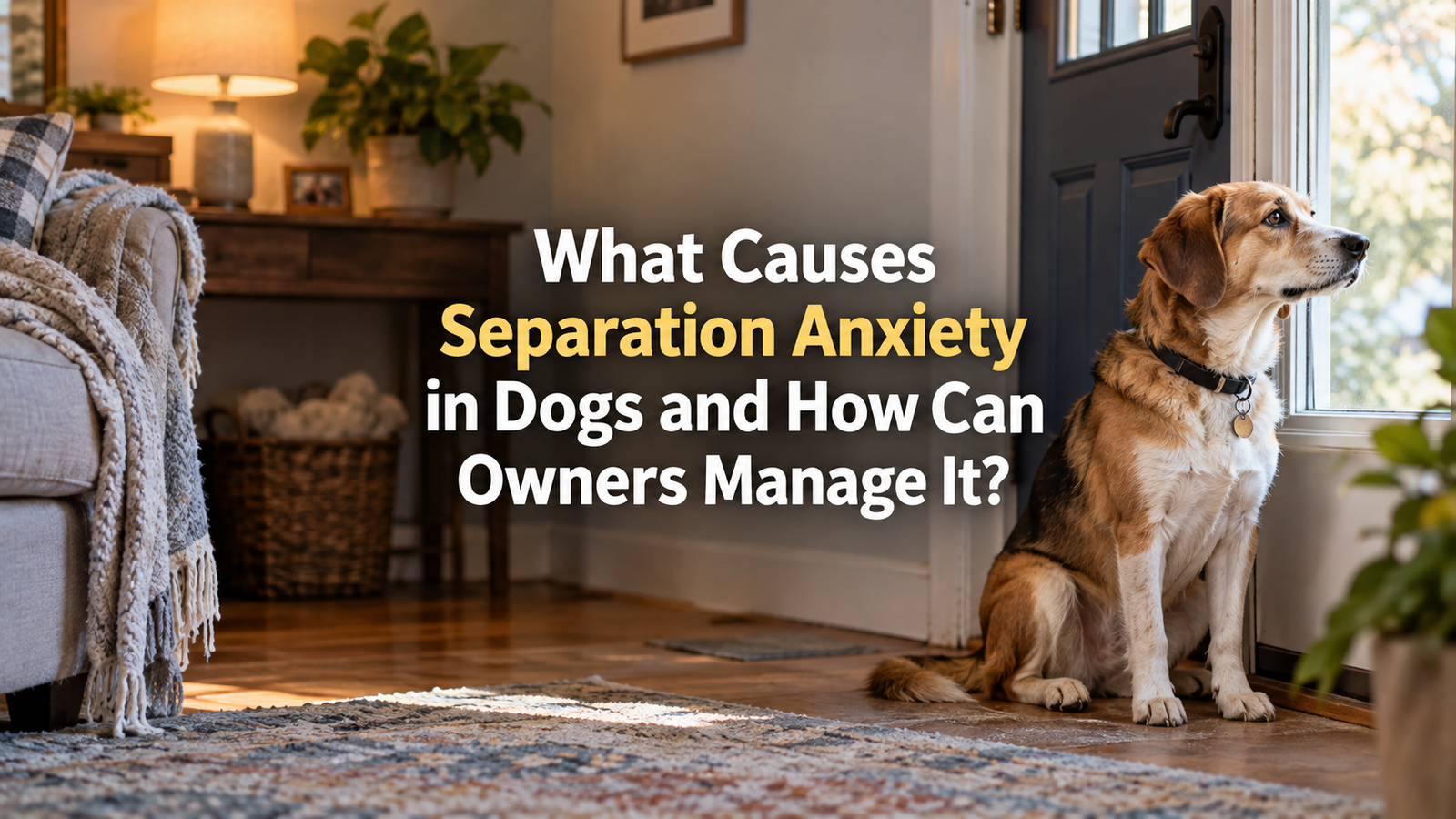
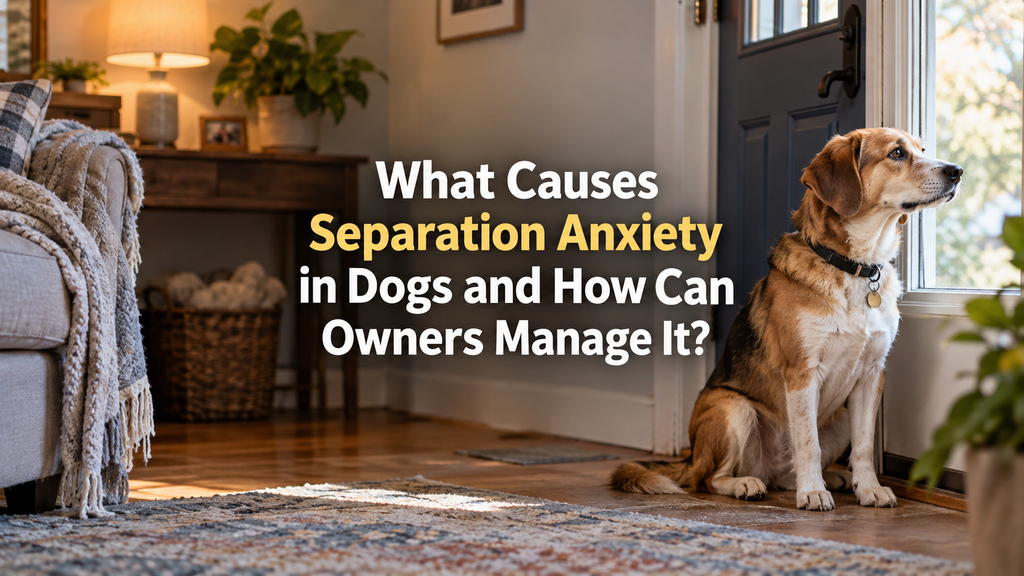
Dogs are naturally social animals that enjoy spending time with their owners. They develop strong emotional connections with the people who care for them, feed them, and make them feel safe. While many dogs can comfortably spend several hours alone, others experience serious emotional distress when separated from their owners. This condition is commonly known as separation anxiety in dogs.
Separation anxiety can affect dogs of different ages, breeds, and backgrounds. Some dogs begin showing signs of anxiety when their owners prepare to leave, while others become distressed shortly after being left alone. Their behavior may include excessive barking, destructive chewing, repeated pacing, or attempting to escape.
Understanding the causes of separation anxiety in dogs is important because the condition can affect their emotional and physical well being. With patience, proper training, and a supportive home environment, owners can help their dogs become more comfortable when spending time alone.
This article explains the common causes, warning signs, and practical ways to manage separation anxiety in dogs.
What Is Separation Anxiety in Dogs?
Separation anxiety is a behavioral condition in which dogs experience significant fear or distress when separated from people they are strongly attached to.
A dog with separation anxiety may become nervous when its owner picks up car keys, puts on shoes, or approaches the front door. These ordinary activities can become signals that the owner is about to leave.
Once alone, the dog may struggle to remain calm. Some dogs bark continuously, while others scratch doors, damage household items, or repeatedly walk around the house.
It is important to understand that these behaviors are not acts of revenge or deliberate disobedience. They are often signs that the animal is experiencing emotional distress.
Not every dog that barks or chews furniture has separation anxiety. Boredom, insufficient exercise, medical conditions, and other behavioral problems can produce similar symptoms.
Recognizing the difference helps owners choose the most appropriate solution.
What Causes Separation Anxiety in Dogs?
Several factors can contribute to separation anxiety. In many cases, the condition develops because of a combination of emotional experiences, environmental changes, and individual temperament.
1. Sudden Changes in Daily Routine
Dogs feel more secure when their daily activities follow a familiar pattern.
Regular feeding times, walks, play sessions, and sleeping schedules help them understand what to expect throughout the day.
When an owner suddenly changes their routine, the dog may struggle to adjust.
For example, a dog that has spent several months with an owner working from home may become distressed when that person begins working outside the home.
The sudden increase in time spent alone can trigger separation related problems, particularly in dogs that have not learned to remain comfortable without company.
2. Previous Abandonment or Rehoming
Dogs that have experienced major changes in their living arrangements may develop separation anxiety.
Some rescued dogs have lived in several homes or spent time in shelters before being adopted.
These experiences do not automatically cause separation anxiety, but repeated changes in caregivers and surroundings may increase insecurity in certain dogs.
A newly adopted dog may become strongly attached to its new owner and struggle when that person leaves.
Providing a predictable routine and gradually introducing short periods of separation can help the dog develop confidence.
3. Lack of Experience Spending Time Alone
Some dogs have very little experience being alone.
Puppies that receive constant attention without opportunities to develop independence may find separation difficult as they grow older.
For example, a puppy that follows its owner everywhere may become uncomfortable when it can no longer maintain constant contact.
This does not mean owners should avoid affection.
Instead, dogs benefit from learning that spending short periods apart is a normal and safe part of daily life.
4. Changes in Family Environment
Dogs can be sensitive to changes within their household.
Moving to a new home, welcoming a baby, introducing another pet, or losing a familiar family member may affect their emotional security.
Even changes in household schedules can influence a dog’s behavior.
A dog that previously spent most of the day with several family members may become anxious if everyone suddenly begins leaving at the same time.
Allowing time for adjustment can reduce stress during these transitions.
5. Frightening Experiences While Alone
Some dogs develop anxiety after experiencing something frightening during their owner’s absence.
Thunderstorms, fireworks, construction noise, or other unexpected events can create negative associations with being alone.
For example, a dog that experiences a severe thunderstorm while home alone may become fearful during future separations.
The dog may begin associating the owner’s absence with feelings of danger.
In such situations, identifying the source of fear is an important part of managing the problem.
What Are the Common Signs of Separation Anxiety in Dogs?
Recognizing separation anxiety early can help owners prevent the condition from becoming more severe.
Common warning signs include the following behaviors.
Excessive Barking or Howling
Dogs experiencing separation anxiety may bark, whine, or howl repeatedly after their owners leave.
The vocalization may continue for long periods and can occur even when the dog has enough food, water, and toys.
Destructive Chewing and Scratching
Some anxious dogs chew furniture, damage cushions, or scratch doors and windows.
These activities may occur because the dog is distressed or attempting to escape and reunite with its owner.
Repeated scratching and escape attempts can sometimes lead to physical injuries.
Restlessness and Repeated Pacing
An anxious dog may walk continuously around the house instead of resting.
Some dogs follow the same walking pattern repeatedly.
This behavior may begin before the owner leaves or continue during the absence.
Urinating or Defecating Indoors
A previously house trained dog may occasionally urinate or defecate indoors when experiencing severe separation distress.
However, medical problems and incomplete house training can cause similar accidents.
A veterinary examination is important when this behavior appears unexpectedly.
Excessive Salivation or Panting
Some dogs show physical signs of stress, including heavy panting, drooling, trembling, or difficulty settling.
These symptoms can also occur because of heat, pain, or illness, so they should not automatically be attributed to anxiety.
Trying to Escape
Dogs with severe separation anxiety may attempt to escape through doors, windows, or other openings.
This behavior requires immediate attention because it can result in broken teeth, damaged nails, or other injuries.
How Can Owners Manage Separation Anxiety in Dogs?
Managing separation anxiety requires consistency, patience, and an understanding of the dog’s emotional needs.
The goal is to help the dog feel safe and relaxed even when its owner is not nearby.
1. Introduce Alone Time Gradually
Gradual separation training is one of the most useful approaches for helping dogs become comfortable alone.
Begin with very short periods of separation that the dog can tolerate without becoming distressed.
For example, an owner might briefly step into another room and return before the dog becomes anxious.
As the dog becomes comfortable, the owner can slowly increase the duration.
For dogs with severe separation anxiety, even a few seconds may initially be too difficult.
Training should progress according to the dog’s behavior rather than following a strict timetable.
If the dog begins barking, panicking, or attempting to escape, the training may be moving too quickly.
2. Establish a Consistent Daily Routine
A predictable routine can help dogs feel more secure.
Try to maintain regular schedules for meals, walks, playtime, and rest.
A familiar routine allows dogs to anticipate everyday activities and reduces unnecessary uncertainty.
Although schedules cannot always remain identical, maintaining consistency where possible can support emotional stability.
3. Provide Appropriate Physical Exercise
Regular physical activity contributes to a dog’s overall health and emotional well being.
Daily walks, outdoor games, and suitable exercise sessions provide opportunities to release energy and explore the environment.
A dog that receives appropriate exercise may find it easier to relax during quiet periods.
However, exercise alone will not cure separation anxiety.
The amount and intensity of exercise should match the dog’s age, breed, health, and physical abilities.
4. Offer Mental Stimulation
Mental activities help dogs remain engaged and encourage healthy behavior.
Puzzle feeders, food dispensing toys, scent games, and simple training exercises can provide valuable mental stimulation.
Owners may offer a safe enrichment activity before leaving home.
However, some dogs with severe separation anxiety become too distressed to eat or play once their owners disappear.
In these cases, enrichment should support a broader training plan rather than replace behavioral treatment.
5. Create a Comfortable Resting Area
A quiet and familiar resting place can help dogs feel secure.
Choose an area with comfortable bedding, appropriate ventilation, and easy access to drinking water.
Some dogs prefer a quiet room, while others feel more comfortable resting in a familiar section of the house.
A crate may help certain dogs that already enjoy using one, but confinement can worsen distress in dogs that panic when enclosed.
Owners should never force an anxious dog into a crate as a treatment for separation anxiety.
The priority is creating a safe environment where the dog can relax naturally.
6. Practice Calm Departures and Returns
Owners can help reduce excitement around departures by keeping their behavior relaxed and predictable.
Before leaving, avoid creating unnecessary excitement or tension.
When returning home, greet the dog calmly once it is comfortable.
There is no need to ignore the dog or withhold affection.
The important goal is to make departures and reunions feel like ordinary daily experiences rather than frightening events.
7. Reduce Sensitivity to Departure Signals
Some dogs become anxious before their owners leave because they recognize familiar signals.
Picking up keys, wearing shoes, or carrying a bag may immediately trigger nervous behavior.
Owners can gradually reduce this sensitivity by practicing these actions without actually leaving.
For example, pick up the keys and sit down again.
Repeat this activity occasionally while the dog remains calm.
Over time, the dog may stop interpreting every departure signal as a sign of prolonged separation.
8. Avoid Punishment
Punishing a dog for anxiety related behavior can increase fear and make the condition worse.
A dog that damages furniture or barks during separation is not necessarily behaving badly on purpose.
Scolding the dog after returning home does not teach it how to feel safe while alone.
Instead, owners should focus on positive reinforcement, gradual training, and reducing stressful situations.
Rewarding calm behavior can help build confidence and encourage healthier responses.
9. Use a Pet Camera to Observe Behavior
A pet camera can help owners understand what happens when their dog is alone.
Observing the dog’s behavior may reveal when anxiety begins, how long it lasts, and which activities trigger distress.
Some dogs begin showing symptoms immediately, while others remain comfortable for a short period before becoming anxious.
Video recordings can also help veterinarians and qualified behavior professionals distinguish separation anxiety from other problems.
10. Seek Professional Help When Necessary
Some dogs experience severe anxiety that cannot be managed through simple home adjustments.
If a dog frequently injures itself, attempts to escape, refuses food during separation, or shows intense panic, professional assistance is important.
A veterinarian can assess possible medical causes and recommend appropriate treatment.
A qualified veterinary behaviorist or experienced reward based behavior professional can help develop an individualized training plan.
In certain cases, a veterinarian may recommend medication alongside behavior modification.
Medication should only be used under veterinary supervision.
How Long Does It Take to Improve Separation Anxiety in Dogs?
The time required to manage separation anxiety varies considerably.
Some dogs improve after several weeks of consistent training, while others may need several months or longer.
The severity of anxiety, previous experiences, daily environment, and quality of training can influence progress.
Owners should avoid rushing the process.
Repeatedly leaving a distressed dog alone for longer than it can tolerate may slow improvement.
When possible, arranging temporary care from trusted family members, pet sitters, or suitable daycare services can prevent repeated panic during the training period.
Small improvements are meaningful signs of progress.
Can Separation Anxiety in Dogs Be Prevented?
Although separation anxiety cannot always be prevented, early training may reduce the risk of developing separation related problems.
Puppies and newly adopted dogs can benefit from positive experiences with short periods of independence.
Owners should provide affection, regular interaction, and opportunities for independent relaxation.
Introducing changes gradually and maintaining a predictable home environment can also help dogs adapt to everyday challenges.
It is equally important to recognize that separation anxiety is not always caused by excessive attention or poor training.
Some dogs may be more vulnerable because of their temperament, experiences, or other factors outside the owner’s control.
Frequently Asked Questions About Separation Anxiety in Dogs
Can dogs develop separation anxiety suddenly?
Yes. Separation anxiety can appear after major changes such as moving homes, changes in working hours, or the loss of a familiar companion. Sudden behavioral changes should also be discussed with a veterinarian to rule out medical problems.
Should I get another dog to reduce separation anxiety?
Another dog does not necessarily solve separation anxiety. Many affected dogs are specifically distressed by separation from their human caregivers. Introducing another pet should be considered carefully rather than treated as a guaranteed solution.
Is it safe to leave a dog with separation anxiety alone?
Mild cases may be managed with appropriate training and support. However, dogs that panic, injure themselves, or attempt dangerous escapes should not be left in situations that create serious safety risks. Professional guidance is especially important in these cases.
Can older dogs develop separation anxiety?
Yes. Older dogs can develop separation related distress because of changes in health, hearing, vision, cognition, or household routines. A veterinary examination is particularly important when anxiety begins later in life.
Conclusion
Separation anxiety in dogs is a genuine emotional and behavioral condition that deserves patience and understanding. Changes in routine, unfamiliar environments, frightening experiences, and limited experience spending time alone can all contribute to separation related distress.
Recognizing symptoms such as excessive barking, destructive chewing, pacing, and escape attempts allows owners to respond before the problem becomes more serious.
The most effective approach involves gradual separation training, predictable routines, appropriate exercise, mental stimulation, and a comfortable living environment. Severe cases may require professional behavioral treatment and veterinary support.
Above all, helping a dog overcome separation anxiety means building a sense of safety and confidence. With consistent care and realistic expectations, many dogs can learn to feel more comfortable when their owners leave home and enjoy a calmer, healthier daily life.