Food allergies in dogs and cats are an important health concern that every pet owner should understand. Just like humans, pets can develop unwanted reactions to certain ingredients in their daily meals. These reactions may affect their skin, digestive system, ears, and overall comfort. Sometimes, the symptoms are mild and difficult to recognize, while in other cases, they can seriously affect a pet’s quality of life.
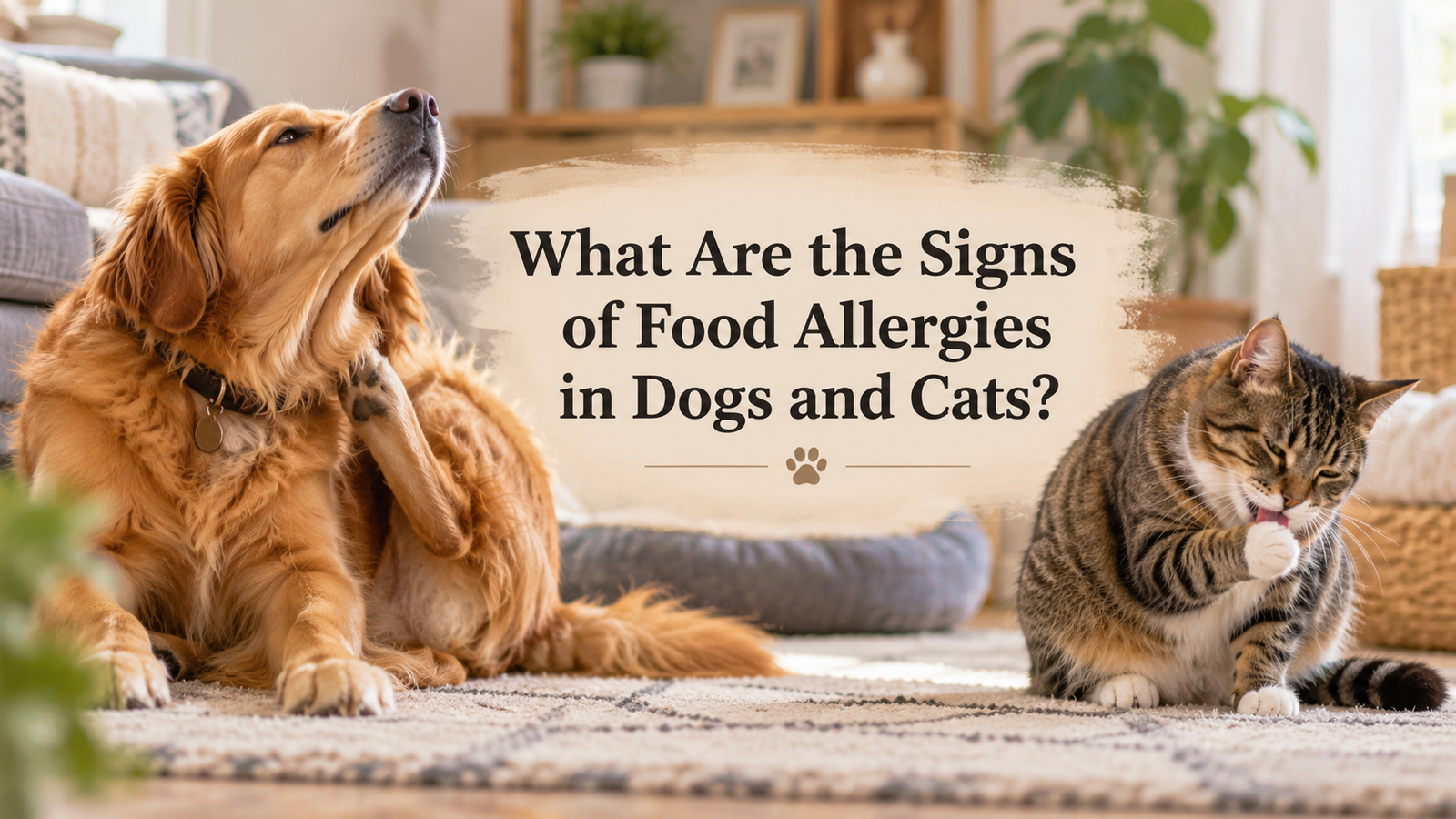
Many pet owners believe that food allergies always cause stomach problems. However, one of the most common signs of food allergies in dogs and cats is persistent skin itching. A pet may scratch frequently, lick its paws, or develop irritated skin without an obvious explanation.
Understanding the signs of food allergies in dogs and cats helps owners recognize potential problems and seek veterinary advice. Early attention can reduce discomfort and prevent complications such as skin infections and nutritional problems.
What Are Food Allergies in Dogs and Cats?
A food allergy occurs when a pet’s immune system mistakenly identifies a particular food ingredient as harmful. The immune system responds to that ingredient and causes inflammation or other symptoms.
Proteins are among the most common substances responsible for food allergies. Ingredients such as chicken, beef, dairy products, fish, and eggs may trigger reactions in certain pets.
However, not every pet develops allergies to these foods. Most dogs and cats can eat them safely when they are included in a suitable, balanced diet.
Food allergies can develop at different ages. A dog or cat may eat the same food for months or years before showing symptoms.
It is also important to understand that true food allergies are less common than some other causes of itching and digestive problems. Fleas, environmental allergies, parasites, infections, and digestive disorders can produce similar symptoms.
1. Persistent Itching and Scratching
One of the most noticeable signs of food allergies in dogs and cats is continuous itching.
An affected pet may scratch its body repeatedly, even when there are no visible fleas or other obvious causes.
Dogs commonly experience itching around their paws, ears, belly, and face. Cats often scratch around their head, neck, and ears.
Frequent scratching can damage the skin and create small wounds. These irritated areas may eventually become infected.
Pet owners should pay attention when scratching becomes excessive or continues throughout the year.
Although itching does not automatically mean a food allergy, persistent discomfort deserves veterinary attention.
2. Redness and Skin Irritation
Skin inflammation is another possible symptom of food allergies in pets.
The affected skin may become red, irritated, or sensitive. Some animals develop small bumps, crusts, or inflamed patches.
Dogs may show redness around their stomach, armpits, paws, or ears. Cats can develop irritated areas around their face and neck.
Repeated scratching can make these problems worse.
In some cases, the skin becomes thicker or darker because of ongoing inflammation.
These changes may develop gradually, making them difficult to notice during the early stages.
Regular grooming and skin examinations can help owners recognize unusual changes.
3. Excessive Paw Licking in Dogs
Dogs naturally lick their paws occasionally to clean themselves. However, constant paw licking may indicate an underlying problem.
A dog experiencing food related skin irritation may repeatedly lick or chew its paws to relieve itching.
Over time, the skin between the toes can become red and uncomfortable.
Moisture from continuous licking can also encourage secondary yeast or bacterial infections.
Some dogs may develop stained fur around their paws because of repeated saliva exposure.
Paw licking can also result from environmental allergies, injuries, or infections. A veterinarian can help identify the actual cause.
4. Repeated Ear Infections
Frequent ear problems may be associated with food allergies, particularly in dogs.
An affected pet may shake its head, scratch its ears, or rub its head against furniture.
The ears may appear red, inflamed, or uncomfortable.
In some cases, owners notice unusual discharge or an unpleasant smell coming from the ears.
These symptoms often indicate an ear infection that requires treatment.
Food allergies can contribute to recurring ear inflammation, but other causes must also be considered.
If ear infections keep returning after treatment, a veterinarian may investigate possible allergic conditions.
5. Vomiting After Eating
Digestive problems are another possible sign of food allergies in dogs and cats.
Some pets experience repeated vomiting when their digestive system reacts to certain food ingredients.
Vomiting may occur after meals or at different times during the day.
However, occasional vomiting does not necessarily indicate an allergy.
Cats may vomit because of hairballs, dietary changes, or other health conditions. Dogs may experience vomiting from eating spoiled food or swallowing unsuitable objects.
Repeated vomiting requires veterinary evaluation, especially when accompanied by weakness, dehydration, or loss of appetite.
Owners should avoid assuming that food allergies are the only explanation.
6. Frequent Diarrhea or Soft Stools
Food allergies can sometimes affect normal digestion and bowel movements.
Affected dogs and cats may experience diarrhea, unusually soft stools, or an increased frequency of bowel movements.
Some pets may also strain while passing stool.
Persistent digestive irritation can interfere with comfort and overall health.
However, diarrhea may also result from intestinal parasites, infections, sudden dietary changes, or other digestive conditions.
When diarrhea continues or repeatedly returns, veterinary examination is important.
Blood in the stool, severe weakness, or signs of dehydration require prompt medical attention.
7. Hair Loss and Excessive Grooming
Hair loss is another possible symptom of food allergies, particularly when itching becomes severe.
Dogs may lose fur around irritated areas because of repeated scratching or chewing.
Cats sometimes groom themselves excessively when their skin feels uncomfortable.
This behavior may cause thinning fur or noticeable bald patches.
In some cats, hair loss appears around the abdomen, legs, or sides of the body.
Owners may initially believe that their pet is experiencing normal shedding.
However, unusual bald patches, broken hair, or irritated skin should not be ignored.
A veterinarian can determine whether allergies, parasites, infections, or another condition are responsible.
8. Changes in Bowel Habits
Not every digestive symptom involves obvious vomiting or diarrhea.
Some pets with food related reactions experience increased gas, stomach noises, or changes in their usual bowel habits.
A dog may need to pass stool more frequently than normal.
A cat may begin visiting its litter box more often or appear uncomfortable during bowel movements.
These changes are sometimes subtle and develop over time.
Keeping track of bowel movements, food consumption, and digestive symptoms can provide helpful information during veterinary appointments.
It is important to remember that these signs are not specific to food allergies.
9. Weight Loss and Reduced Body Condition
Some dogs and cats with ongoing digestive problems may gradually lose weight.
This can happen when digestive symptoms interfere with normal eating or nutrient absorption.
A pet may become thinner despite receiving its usual meals.
Its coat may also appear less healthy if the underlying problem continues.
However, weight loss has many possible causes, including dental disease, intestinal disorders, and other medical conditions.
Unexplained weight loss should always be investigated rather than treated through random dietary changes.
Maintaining a healthy body condition is essential for long term pet health.
10. Symptoms That Continue Throughout the Year
An important clue about food allergies is that symptoms may occur regardless of the season.
Environmental allergies sometimes become worse during particular times of the year when pollen or other allergens are present.
Food allergy symptoms often continue throughout the year because the pet regularly consumes the ingredient responsible for the reaction.
For example, a dog may experience itchy paws during both summer and winter.
Similarly, a cat may repeatedly scratch its neck without a clear seasonal pattern.
However, year round itching can also result from dust mites, fleas, and other conditions.
Therefore, the timing of symptoms provides useful information but does not confirm a food allergy.
What Foods Commonly Cause Allergies in Dogs and Cats?
Different pets may react to different food ingredients.
In dogs, frequently reported food allergens include beef, chicken, and dairy products. Other ingredients can also trigger reactions.
In cats, beef, fish, and dairy products are among the commonly identified allergens.
However, there is no single ingredient that causes allergies in every animal.
A food that is suitable for one pet may cause problems for another.
It is also important to understand that grains are not automatically responsible for food allergies. Grain free diets are not necessary for most pets and should not be considered a universal solution.
Pet owners should avoid removing major food groups without veterinary guidance.
What Is the Difference Between Food Allergies and Food Intolerance?
Food allergies and food intolerance are often confused because they can cause similar digestive symptoms.
A food allergy involves an abnormal immune response to a particular ingredient.
Food intolerance does not involve the same allergic immune mechanism.
For example, some pets may experience digestive discomfort after consuming dairy products because they cannot digest lactose efficiently.
This does not necessarily mean they are allergic to milk proteins.
Both conditions can affect comfort and digestion, but they require careful evaluation.
Understanding the difference helps owners avoid unnecessary assumptions about their pet’s diet.
How Do Veterinarians Diagnose Food Allergies?
Veterinarians usually begin by examining the pet and reviewing its medical history.
They may ask questions about the animal’s regular food, treats, medications, and symptoms.
Other causes, such as parasites, infections, and environmental allergies, may need to be investigated.
The most reliable method for diagnosing food allergies is a carefully controlled elimination diet trial.
During this process, the pet receives a specially selected diet containing either hydrolyzed proteins or suitable ingredients it has not previously eaten.
The trial commonly lasts at least eight weeks and sometimes up to twelve weeks, depending on veterinary recommendations.
Owners must follow the feeding instructions carefully. Even small amounts of unsuitable treats or flavored products can interfere with the results.
If symptoms improve, the veterinarian may recommend a controlled food challenge to confirm whether the previous diet caused the reaction.
Routine blood, saliva, and skin allergy tests are not reliable for identifying food allergies in dogs and cats.
How Can Pet Owners Manage Food Allergies?
Once a food allergy has been confirmed, management usually involves avoiding the ingredient responsible for the reaction.
A veterinarian can recommend a complete and balanced diet that meets the pet’s nutritional requirements.
Owners should carefully examine ingredient labels before purchasing treats or additional food products.
Giving leftover human food may accidentally expose the pet to an ingredient that causes symptoms.
Consistency is important because even occasional exposure can trigger another reaction in an allergic animal.
Skin infections and other complications may require separate veterinary treatment.
With suitable dietary management and regular monitoring, many pets with food allergies can remain comfortable and healthy.
When Should You Visit a Veterinarian?
Pet owners should seek veterinary advice when their dog or cat experiences persistent itching, recurring ear infections, ongoing digestive problems, or unexplained hair loss.
Repeated vomiting, diarrhea, or weight loss also deserves professional evaluation.
Sudden facial swelling, breathing difficulty, collapse, or severe weakness requires emergency veterinary care.
Owners should never attempt to treat serious allergic reactions using human medications without veterinary instructions.
Early evaluation helps identify the real cause of symptoms and prevents unnecessary dietary restrictions.
Can Food Allergies in Pets Be Prevented?
There is no guaranteed method for preventing every food allergy in dogs and cats.
However, providing a nutritionally balanced diet and observing changes in health can support early recognition.
Pet owners should introduce new foods carefully and monitor their animals for unusual reactions.
A written record of meals, treats, and symptoms may help identify patterns.
Routine veterinary visits are also valuable because they allow potential health problems to be investigated before complications develop.
Avoiding unnecessary dietary restrictions is equally important, especially for growing puppies and kittens that need balanced nutrition.
Frequently Asked Questions
Can dogs and cats suddenly develop food allergies?
Yes. Food allergies can develop even after a pet has eaten the same ingredient for a long time. Previous tolerance does not guarantee that an allergy will never appear.
Can food allergies cause itchy skin without stomach problems?
Yes. Some pets experience mainly skin related symptoms, including scratching, paw licking, and ear inflammation, without obvious digestive problems.
How long does it take to identify a food allergy?
A veterinarian supervised elimination diet trial generally requires several weeks, commonly eight to twelve weeks. Confirmation may require reintroducing the previous food under veterinary guidance.
Can changing pet food cure an allergy?
Changing food may help if the new diet avoids the confirmed allergen. However, randomly switching brands does not reliably identify or manage food allergies.
Are food allergies dangerous for pets?
Many cases can be managed successfully, but persistent itching, infections, and digestive problems can affect a pet’s health. Severe allergic reactions are uncommon but require emergency attention.
Conclusion
Recognizing the signs of food allergies in dogs and cats is an important part of responsible pet ownership. Persistent itching, skin irritation, paw licking, repeated ear infections, vomiting, diarrhea, and unusual hair loss are symptoms that deserve attention.
However, these signs do not always mean that a pet has a food allergy. Many other health conditions can produce similar problems, making veterinary diagnosis essential.
A properly supervised elimination diet, careful symptom monitoring, and an appropriate nutritional plan can help identify and manage food related reactions.
By understanding their pets’ behavior and physical changes, owners can make informed decisions that support better comfort, digestion, skin health, and overall wellbeing.
The goal is not simply to change what a pet eats, but to understand what is causing the problem and provide the right care for a healthier life.