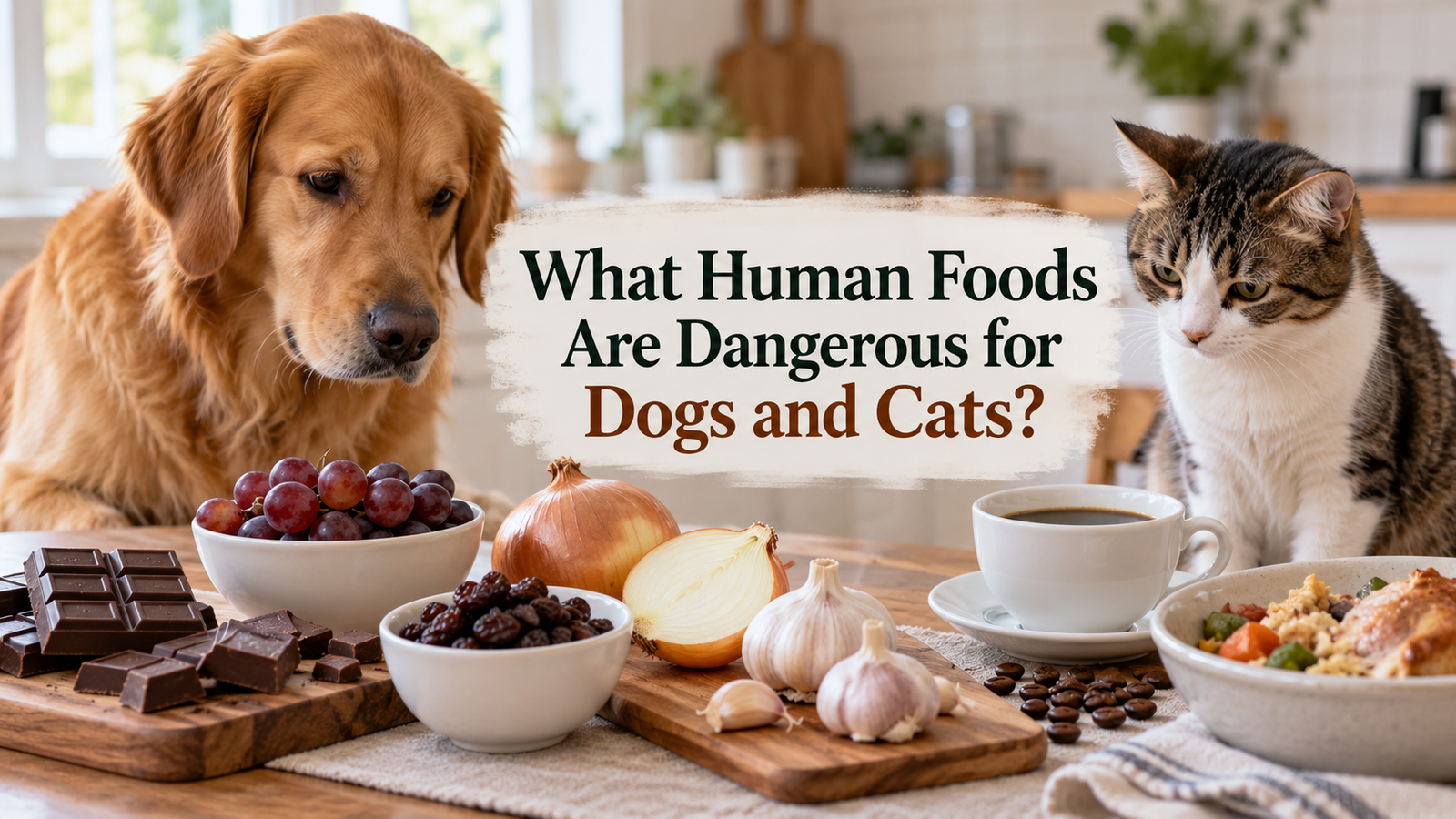
Dogs and cats are important members of our families. We care about their health, happiness, and daily comfort. Many pet owners enjoy sharing small portions of their meals with their animals. Although this may seem like a loving habit, some human foods can be dangerous for dogs and cats.
Animals have different digestive systems and nutritional requirements compared with humans. A food that is completely safe for people may cause stomach problems, poisoning, or serious health complications in pets.
Understanding what human foods are dangerous for dogs and cats is an important responsibility for every pet owner. Learning about harmful ingredients can help prevent accidental poisoning and support a healthier life for our furry companions.
In this article, we will explore common human foods that pets should avoid, explain their possible health effects, and discuss practical ways to keep dogs and cats safe.
Why Are Some Human Foods Dangerous for Pets?
Dogs and cats process food differently from humans. Their bodies cannot always break down certain substances found in everyday meals.
Some foods contain chemicals that directly damage an animal’s organs. Others contain excessive amounts of fat, salt, or sugar that can cause digestive problems.
Cats are particularly sensitive to certain ingredients because their bodies process some chemicals differently. Dogs may be more likely to consume harmful foods because they often investigate unfamiliar objects with their mouths.
The effects of harmful foods depend on several factors, including the animal’s weight, age, health condition, the amount consumed, and the specific ingredient involved.
Even a small quantity of certain toxic substances may require immediate veterinary attention.
1. Chocolate Can Cause Serious Poisoning
Chocolate is one of the most widely recognized dangerous human foods for dogs and cats.
It contains two substances called theobromine and caffeine. These compounds affect the nervous system and heart.
Humans can process these substances more effectively than dogs and cats.
Dark chocolate, baking chocolate, and cocoa powder contain especially high amounts of theobromine.
Common symptoms of chocolate poisoning include vomiting, diarrhea, increased thirst, restlessness, rapid heartbeat, muscle tremors, and seizures.
Dogs are more frequently affected because they may eat large amounts of chocolate when given the opportunity.
Pet owners should keep chocolates, cakes, brownies, and cocoa products in secure containers.
If a pet accidentally eats chocolate, contact a veterinarian immediately rather than waiting for symptoms.
2. Onions and Garlic Can Damage Red Blood Cells
Onions and garlic are common ingredients in household cooking. However, they can be harmful to both dogs and cats.
These foods contain compounds that can damage red blood cells and cause anemia.
Cats are particularly sensitive, although dogs can also develop serious health problems.
Raw onions, cooked onions, onion powder, garlic powder, and foods containing concentrated amounts of these ingredients may cause poisoning.
Symptoms can include weakness, vomiting, reduced appetite, pale gums, and unusual tiredness.
Some symptoms may not appear immediately.
This is especially important for pet owners who regularly prepare meat dishes, curries, soups, and gravies.
These meals often contain onions, garlic, salt, and spices.
It is safer to offer pets properly prepared food without harmful seasonings.
3. Grapes and Raisins Can Damage a Dog’s Kidneys
Grapes and raisins may appear to be healthy snacks because they contain vitamins and natural nutrients.
However, they are dangerous for dogs.
Eating grapes or raisins can cause sudden kidney injury, which may become life threatening.
The amount that causes poisoning varies between dogs, making it impossible to identify a reliably safe serving.
Possible symptoms include vomiting, diarrhea, weakness, decreased appetite, and changes in urination.
Raisins are commonly found in cakes, biscuits, cereals, and baked products.
Although grape and raisin toxicity is best documented in dogs, it is sensible to keep these foods away from cats as well because their safety in cats has not been established.
If a dog consumes grapes or raisins, immediate veterinary guidance is essential.
4. Xylitol Is Extremely Dangerous for Dogs
Xylitol is a sugar substitute commonly used in sugar free chewing gum, candies, certain baked products, and some peanut butter varieties.
It may also be labeled as birch sugar.
For humans, xylitol is commonly used as a sweetening ingredient. For dogs, it can cause a dangerous drop in blood sugar.
This happens because xylitol can trigger a rapid release of insulin.
In serious cases, it may also cause liver damage.
Signs of poisoning can include vomiting, weakness, difficulty walking, shaking, collapse, and seizures.
Xylitol poisoning is primarily a serious concern in dogs, and cats are not known to develop the same characteristic reaction.
Pet owners should carefully examine ingredient labels before offering any packaged human food.
A dog that consumes xylitol needs emergency veterinary advice even if it initially appears healthy.
5. Coffee and Tea Can Affect a Pet’s Heart
Coffee, tea, energy drinks, and certain soft drinks contain caffeine.
Caffeine stimulates the nervous system and can be toxic to dogs and cats.
While people may enjoy drinking tea or coffee every morning, these beverages should never be offered to pets.
Caffeine poisoning may cause restlessness, rapid breathing, increased heart rate, vomiting, muscle tremors, and seizures.
Coffee beans, tea bags, and caffeine supplements may be particularly dangerous because they can contain concentrated caffeine.
Even foods such as coffee flavored desserts may contain ingredients that are unsuitable for animals.
Always provide clean drinking water rather than sharing caffeinated beverages.
6. Alcohol Can Cause Dangerous Health Problems
Alcoholic drinks and foods containing alcohol are unsafe for dogs and cats.
Animals are much smaller than humans, and alcohol can affect their bodies severely.
Alcohol exposure may lead to vomiting, poor coordination, weakness, difficulty breathing, low body temperature, and loss of consciousness.
Severe poisoning can result in coma or death.
Alcohol can also be present in some desserts, sauces, and fermented products.
Pet owners should never offer alcoholic drinks to their animals, even as a joke or experiment.
If accidental exposure occurs, seek immediate veterinary assistance.
7. Raw Bread Dough Can Expand Inside the Stomach
Raw bread dough containing active yeast presents a special danger.
After being swallowed, the dough can continue expanding inside an animal’s warm stomach.
This expansion may cause painful swelling and serious digestive complications.
Yeast also produces alcohol during fermentation, creating an additional poisoning risk.
Symptoms may include a swollen abdomen, weakness, vomiting attempts, and unusual behavior.
Raw yeast dough should always be kept away from curious pets.
8. Macadamia Nuts Are Toxic to Dogs
Macadamia nuts are a popular snack among humans, but they can cause poisoning in dogs.
Affected animals may experience vomiting, weakness, shaking, difficulty walking, and increased body temperature.
The exact reason for this toxicity is not fully understood.
Other nuts, including walnuts, pecans, and almonds, can also cause digestive problems because of their high fat content. Some may create choking hazards.
Cats should also avoid macadamia nuts and other fatty snacks.
Rather than offering nuts, pet owners should choose treats specifically prepared for dogs or cats.
9. Excessively Salty Foods Can Be Harmful
Salt is necessary in small amounts for normal body functions, but excessive consumption can be dangerous.
Human snacks such as chips, salted nuts, processed meats, and heavily seasoned leftovers may contain too much sodium.
Eating excessive salt can cause increased thirst, vomiting, diarrhea, weakness, and serious neurological problems.
In severe cases, salt poisoning may cause tremors or seizures.
Pets should always have access to fresh drinking water.
However, water alone is not a substitute for veterinary treatment when salt poisoning is suspected.
A balanced commercial pet food generally provides an appropriate amount of sodium.
10. Fatty and Fried Foods Can Cause Digestive Problems
Many household meals contain large amounts of oil, butter, or animal fat.
Examples include fried chicken, fatty meat, greasy leftovers, and heavily buttered foods.
These meals may cause vomiting, diarrhea, and stomach discomfort in dogs and cats.
In some animals, eating a large quantity of fatty food can contribute to pancreatitis, a painful inflammation of the pancreas.
Pancreatitis can require urgent veterinary treatment.
Instead of feeding greasy leftovers, owners can occasionally offer small portions of plain, thoroughly cooked, boneless meat when appropriate.
Regular meals should still come from a complete and balanced pet diet.
11. Milk and Dairy Products May Cause Stomach Upset
Many people believe that cats naturally need milk.
However, most adult cats cannot digest large amounts of lactose effectively.
Dogs may also experience digestive discomfort after consuming dairy products.
Milk, cream, and certain cheeses can cause diarrhea, gas, and abdominal discomfort in lactose sensitive animals.
Although dairy products are not generally considered poisonous, they are unnecessary for most adult pets.
Clean water is the best everyday drink for dogs and cats.
Young kittens and puppies that require milk should receive their mother’s milk or an appropriate commercial milk replacer.
12. Cooked Bones Can Cause Serious Injuries
Giving bones to dogs may seem natural, but certain bones can be extremely dangerous.
Cooked bones may become brittle and break into sharp pieces when chewed.
These fragments can damage the mouth, throat, stomach, or intestines.
Bones can also become trapped in the digestive system and cause dangerous blockages.
Cats face similar risks when swallowing small fish or chicken bones.
Pet owners should remove bones before offering cooked meat.
Veterinarian recommended chewing products are generally safer alternatives than leftover bones.
13. Raw Meat and Raw Eggs May Contain Harmful Bacteria
Some pet owners believe that raw meat is automatically healthier because wild animals eat uncooked food.
However, raw meat and eggs can contain harmful bacteria such as Salmonella and E. coli.
These bacteria can cause illness in animals and may also spread to people through contaminated food bowls, surfaces, or feces.
Young animals, elderly pets, and animals with weakened immune systems may face greater risks.
Plain, properly cooked meat can be a safer occasional treat, provided it contains no harmful seasoning or bones.
A veterinarian can help owners choose a complete diet that meets their pet’s nutritional needs.
14. Avocado Can Cause Problems in Some Pets
Avocado contains a substance called persin.
Dogs and cats are generally less sensitive to persin than certain other animals, but avocado can still create problems.
Its high fat content may cause stomach upset, particularly when consumed in large amounts.
The large avocado seed also presents a choking or intestinal blockage risk.
Avocado skin and pits should never be offered to pets.
Although a small amount of plain avocado flesh is not usually severely toxic to dogs or cats, it is not a necessary part of their diet.
15. Fruit Pits and Seeds Can Be Dangerous
Some fruits are safe for pets when properly prepared, but their pits and seeds may cause problems.
Cherry, peach, plum, and apricot pits can create choking hazards or intestinal blockages.
Certain fruit pits also contain substances capable of releasing cyanide when chewed and damaged.
Pet owners should remove seeds, pits, and hard cores before offering suitable fruits.
Fruit should only be offered in small amounts as an occasional treat.
What Are the Common Signs of Food Poisoning in Pets?
Recognizing possible symptoms can help owners respond quickly.
Common warning signs include vomiting, diarrhea, weakness, loss of appetite, excessive drooling, abdominal pain, unusual behavior, shaking, and difficulty breathing.
Some toxic foods can also cause pale gums, seizures, collapse, or changes in urination.
Symptoms vary depending on the food consumed.
Importantly, a pet may appear normal immediately after eating a poisonous ingredient.
This does not mean the animal is safe.
Early veterinary assessment can reduce the risk of serious complications.
What Should You Do If Your Dog or Cat Eats Dangerous Food?
If you suspect that your pet has eaten a toxic substance, contact a veterinarian or emergency animal clinic immediately.
Try to identify the food, estimate how much was consumed, and note the approximate time of exposure.
Keep the packaging or ingredient list if available.
Do not attempt to make your pet vomit unless a veterinarian specifically instructs you to do so.
Avoid giving home remedies, salt, oil, or human medications.
Some poisoning cases require urgent treatment even before symptoms develop.
Quick action is especially important after exposure to chocolate, grapes, raisins, xylitol, or other known toxins.
How Can Pet Owners Prevent Accidental Food Poisoning?
Prevention is one of the easiest ways to protect pets from harmful human foods.
Keep dangerous ingredients in closed cabinets or secure containers.
Avoid leaving chocolate, sweets, or leftovers on tables where animals can reach them.
Dispose of food waste in covered bins.
Teach children not to share snacks with pets without adult supervision.
Read ingredient labels carefully, particularly on sugar free products.
It is also helpful to explain pet food safety rules to everyone living in the household.
Consistent habits can prevent many avoidable emergencies.
What Human Foods Are Generally Safer for Dogs and Cats?
Not every human food is harmful.
Certain plain foods can be suitable as occasional treats when prepared correctly.
Dogs may enjoy small portions of plain cooked chicken, carrots, pumpkin, or seedless apple slices.
Cats may enjoy small amounts of thoroughly cooked, unseasoned chicken or other suitable meat.
However, cats are obligate carnivores and require specific nutrients that cannot be supplied through vegetables or random household leftovers.
Both dogs and cats need complete, balanced diets appropriate for their age and health conditions.
Treats should generally make up no more than around 10 percent of daily calorie intake.
New foods should be introduced carefully, and owners should consult a veterinarian when their pet has special dietary requirements.
Frequently Asked Questions
Can dogs and cats eat the same human foods?
Some plain foods may be suitable for both animals, but their nutritional needs differ. Cats require more specialized animal based nutrition, while dogs can consume a wider variety of properly selected foods.
Is chocolate dangerous for cats as well as dogs?
Yes. Chocolate contains substances that are toxic to both species. Cats are less likely to eat large quantities, but exposure still requires veterinary advice.
Can pets eat homemade food every day?
Homemade diets can be used when they are properly formulated to provide all essential nutrients. Random leftovers are not a reliable replacement for complete pet food.
How quickly do symptoms of food poisoning appear?
Some symptoms develop within minutes or hours, while others may take several days. Owners should not wait for symptoms before contacting a veterinarian after suspected toxic food ingestion.
Conclusion
Understanding what human foods are dangerous for dogs and cats is essential for responsible pet ownership.
Common household ingredients such as chocolate, onions, garlic, grapes, raisins, caffeine, alcohol, and xylitol can cause serious health problems. Other foods, including fatty meals, dairy products, and bones, may create digestive issues or physical injuries.
The safest approach is to provide a balanced pet diet, offer carefully selected treats, and keep dangerous foods out of reach.
By learning about harmful ingredients and responding quickly to accidental exposure, pet owners can create a safer home environment and support the long term health of their beloved dogs and cats.