
Introduction
Every pet owner wants to provide healthy, nutritious, and safe food for their beloved animals. Food plays an important role in maintaining a pet’s energy, supporting growth, improving digestion, and protecting overall health. In recent years, many people have become interested in homemade pet food because they want greater control over what their dogs and cats eat.
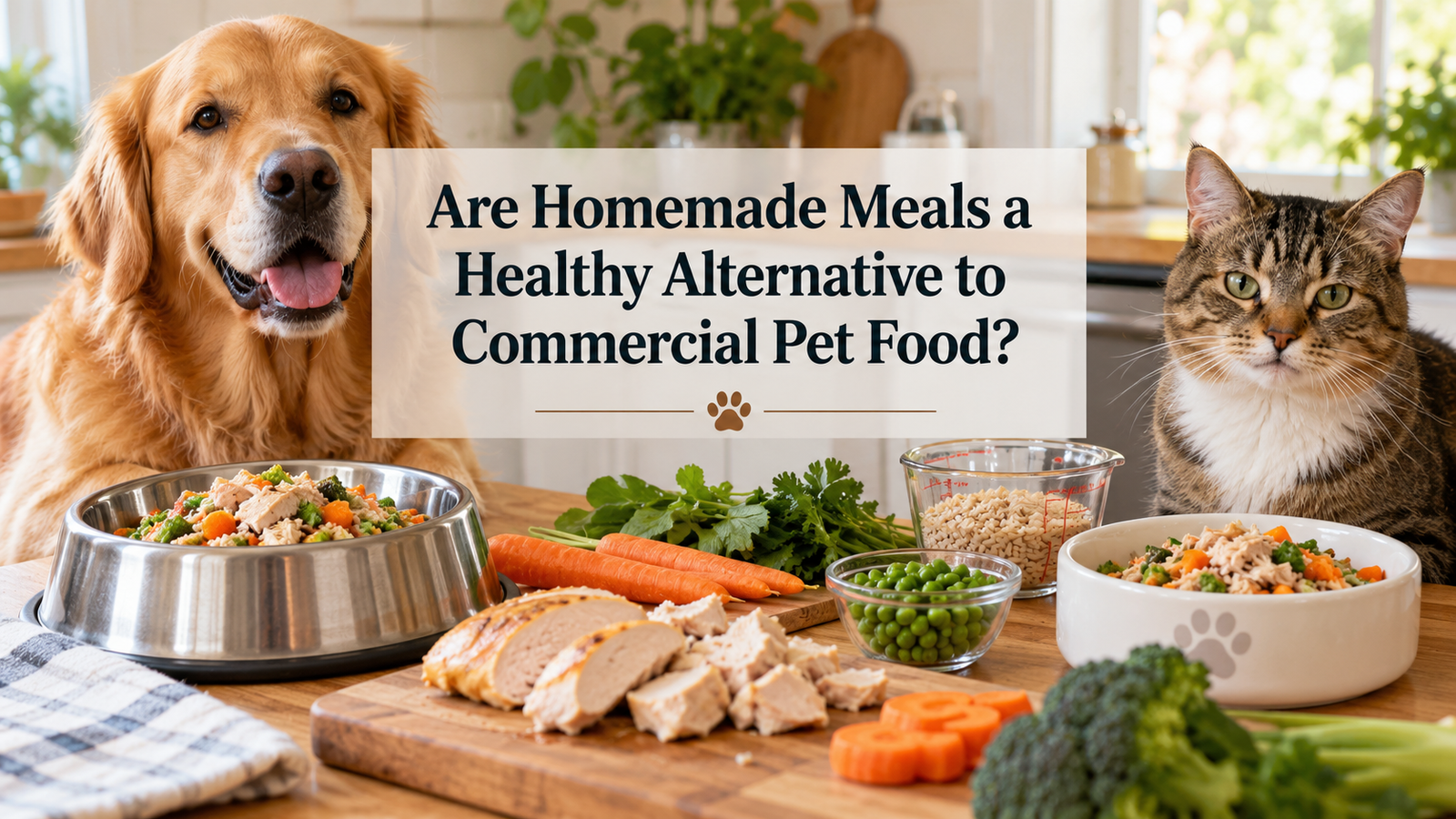
Homemade meals often seem more natural because they are prepared using familiar ingredients such as chicken, rice, vegetables, and fish. However, an important question remains: Are homemade meals a healthy alternative to commercial pet food?
The answer depends on how the meals are prepared and whether they provide all the nutrients a pet needs. Homemade food can be a healthy option when it is properly balanced, but simply cooking ordinary household ingredients does not guarantee complete nutrition.
Understanding the benefits, risks, and nutritional requirements of homemade pet food can help owners make better feeding decisions.
What Is Homemade Pet Food?
Homemade pet food refers to meals prepared at home specifically for dogs, cats, or other companion animals. Unlike commercially manufactured pet food, these meals are created using ingredients selected and cooked by the pet owner.
Common ingredients used in homemade meals include cooked chicken, lean meat, fish, rice, pumpkin, carrots, and certain other vegetables.
However, homemade pet food should not be confused with feeding pets leftover human meals. Food prepared for people may contain excessive salt, spices, oils, or ingredients that are harmful to animals.
A properly formulated homemade diet should meet the nutritional requirements of the individual pet, considering its age, weight, activity level, and health condition.
The most important factor is not whether food is prepared at home or manufactured commercially. What matters is whether it provides safe, complete, and balanced nutrition.
Why Are Pet Owners Choosing Homemade Meals?
Many pet owners prefer homemade meals because they want to understand exactly what their animals are eating.
Commercial pet food labels sometimes contain unfamiliar ingredient names, which can create uncertainty among consumers. Preparing food at home allows owners to select recognizable ingredients and observe how meals are handled.
Another reason is the desire to provide variety. Some pets enjoy freshly cooked meals because of their smell, texture, and moisture content.
Owners may also consider homemade diets when their animals have particular dietary requirements.
For example, a veterinarian might recommend a specially formulated diet for a pet with certain digestive problems or food sensitivities.
However, homemade food is not automatically healthier simply because its ingredients are fresh. Its nutritional quality depends on the complete recipe and how consistently it is prepared.
Potential Benefits of Homemade Pet Food
Greater Control Over Ingredients
One advantage of homemade pet food is the ability to choose individual ingredients.
Owners can select appropriate protein sources, avoid unnecessary seasonings, and monitor the quality of food preparation.
This control may be useful when a pet has a confirmed sensitivity to a particular ingredient.
However, ingredient selection should follow professional nutritional guidance. Removing or replacing ingredients without understanding their nutritional contributions can create deficiencies.
Freshly Prepared Meals
Homemade meals can be prepared using fresh ingredients that have been stored and handled correctly.
Cooking meat thoroughly and serving appropriately stored food can help reduce certain food safety risks.
Fresh preparation may also improve the appeal of food for animals that are selective about their meals.
Nevertheless, freshness alone does not determine nutritional value. A freshly cooked meal can still lack important vitamins and minerals.
Improved Moisture Intake
Homemade meals often contain more moisture than dry commercial food.
This additional water can contribute to a pet’s daily fluid intake, which may be useful for animals that naturally drink smaller amounts of water.
Cats, in particular, may obtain a meaningful portion of their fluid intake through moist food.
However, properly formulated commercial wet foods can provide similar benefits.
Regardless of diet type, pets should always have access to clean drinking water.
Flexibility for Individual Dietary Needs
Another possible advantage is the ability to prepare meals according to an animal’s specific nutritional requirements.
A veterinarian or qualified veterinary nutritionist may design homemade diets for pets with certain medical conditions.
These diets require careful planning because some illnesses involve restrictions or adjustments to particular nutrients.
Owners should never attempt to treat a medical condition simply by following an unverified homemade recipe.
What Are the Risks of Homemade Pet Food?
Although homemade meals have potential benefits, they also present several challenges.
Nutritional Deficiencies
The greatest concern with homemade pet food is the possibility of an unbalanced diet.
Dogs and cats need specific amounts of protein, fats, vitamins, minerals, and other essential nutrients.
A meal containing chicken and rice may provide energy and protein, but it does not automatically supply everything an animal requires.
Research discussed by the Cummings School of Veterinary Medicine at Tufts University has shown that many published homemade pet food recipes fail to provide complete nutrition.
Long term nutritional deficiencies can contribute to problems involving bones, muscles, immunity, and other body systems.
Incorrect Calcium and Phosphorus Balance
Calcium and phosphorus are particularly important for healthy bones and teeth.
Meat contains phosphorus but generally does not provide enough calcium to balance a diet on its own.
A homemade diet based mainly on meat may therefore contain unsuitable mineral proportions.
Growing puppies and kittens are especially vulnerable because their bones are developing rapidly.
Adding random amounts of calcium supplements is not a safe solution because excessive calcium can also cause problems.
Excess Calories and Weight Gain
Homemade food can contribute to obesity when portions are too large or contain excessive fat.
Owners sometimes assume that homemade meals are naturally lighter than commercial food, but this is not always true.
Cooking oils, fatty meat, and oversized servings can significantly increase calorie intake.
A healthy feeding routine requires appropriate portions based on the pet’s body condition, activity, and nutritional requirements.
Homemade Dog Food Versus Homemade Cat Food
Dogs and cats have different nutritional needs, which makes meal planning particularly important.
Dogs can obtain nutrients from a variety of animal and suitable plant ingredients. However, they still require carefully balanced amounts of essential nutrients.
Cats are obligate carnivores, meaning they depend on nutrients naturally supplied by animal tissues.
For example, cats require adequate taurine, an essential amino acid that supports heart function, vision, and other important processes.
They also have particular requirements for certain fatty acids and vitamins.
A homemade recipe suitable for a dog should never automatically be considered appropriate for a cat.
Cats can develop serious health problems when essential nutrients are missing from their regular diet.
For this reason, homemade diets for cats should be formulated with professional guidance rather than based on general recipes found online.
Which Ingredients Can Be Used in Homemade Pet Meals?
Several familiar foods can be included in homemade diets when appropriately prepared and incorporated into a balanced recipe.
Cooked Chicken
Plain, thoroughly cooked, boneless chicken provides protein that supports muscle maintenance and normal body functions.
It should be prepared without harmful seasonings, onions, garlic, or excessive oil.
Chicken alone, however, does not provide complete nutrition.
Lean Meat
Appropriately cooked lean beef or other suitable meats can contribute protein, iron, and several important nutrients.
Excessive fat should be avoided, particularly when managing a pet’s calorie intake.
Pumpkin
Plain cooked pumpkin contains moisture and fiber. Small amounts may be useful in some pets’ diets.
However, excessive fiber can cause digestive discomfort or alter stool consistency.
Rice
Plain cooked rice can supply digestible carbohydrates for dogs and some cats.
It is sometimes included in temporary veterinary feeding plans for digestive problems.
However, rice and meat combinations should not be used as a complete long term diet without proper formulation.
Fish
Certain thoroughly cooked, boneless fish can provide protein and beneficial fats.
Fish should not become the only ingredient in a homemade diet because nutritional variety alone does not guarantee balance.
The amount and type of each ingredient should be determined by the pet’s individual dietary needs.
Human Foods That Should Never Be Added
Some ordinary household ingredients can be dangerous for dogs and cats.
Chocolate, onions, garlic, grapes, raisins, and alcohol should be kept away from pets. Products containing xylitol, a sweetener found in some sugar free foods, are especially dangerous for dogs.
Cooked bones are also unsafe because they may splinter or cause choking, intestinal injury, or obstruction.
Owners should avoid feeding highly seasoned meals, excessive salt, and foods containing unknown additives.
Raw meat is another concern because it can contain harmful bacteria.
The U.S. Food and Drug Administration warns that raw pet food may expose pets and household members to organisms such as Salmonella and Listeria.
FDA
Safe cooking and food handling are essential parts of homemade pet nutrition.
Is Commercial Pet Food Better Than Homemade Food?
Commercial pet food offers several practical advantages.
Reputable manufacturers produce complete and balanced diets designed for specific species and life stages.
These foods may undergo nutrient analysis, quality checks, and feeding evaluations.
Commercial diets are also convenient because owners do not need to prepare each meal or calculate individual nutrients.
However, commercial products vary in nutritional purpose and quality.
Owners should look for a nutritional adequacy statement confirming that a product is complete and balanced for their pet’s life stage.
Homemade food can provide equally appropriate nutrition when a qualified veterinary nutritionist has formulated the recipe and the owner follows it accurately.
There is currently no convincing evidence that homemade diets are generally healthier than properly formulated commercial diets for most healthy pets.
Tufts Sites
The best choice depends on nutritional adequacy, safety, practicality, and the individual animal’s needs.
How Can Pet Owners Prepare Balanced Homemade Meals?
Preparing healthy homemade pet food requires more than selecting nutritious ingredients.
The first step is consulting a veterinarian, ideally one with specialized training in animal nutrition.
A qualified professional can assess the pet’s weight, age, medical history, and energy requirements.
The resulting recipe may include carefully measured ingredients and specific vitamin or mineral supplements.
Owners should follow the instructions exactly because substituting ingredients can significantly change the nutritional composition.
Portion sizes should also be measured consistently.
Regular veterinary checkups help monitor body condition, weight, and any signs of nutritional problems.
Home preparation requires commitment, but proper planning can make it a practical option for some households.
Can Homemade Food Be Mixed With Commercial Pet Food?
Many owners prefer combining a small amount of homemade food with their pet’s usual commercial diet.
This approach can provide variety without requiring a complete change in feeding habits.
For healthy pets, plain cooked chicken or another safe ingredient may sometimes be offered as an occasional topping.
A commonly used guideline is to keep treats and other foods that are not nutritionally complete within approximately 10 percent of daily calorie intake.
The remaining calories should come from an appropriate complete and balanced diet.
Pets with medical conditions or prescribed diets may require stricter feeding rules.
Introducing new foods gradually can also help owners observe changes in appetite, stool quality, or digestive comfort.
Is Homemade Pet Food More Affordable?
The cost of homemade pet food depends on ingredient prices, supplements, preparation time, and the size of the animal.
For small pets, homemade meals may initially appear affordable.
However, a nutritionally complete recipe can require several ingredients and specialized supplements.
Larger dogs may consume substantial quantities of food, increasing expenses.
Commercial pet food offers predictable serving costs and often requires less preparation time.
Therefore, homemade diets are not necessarily cheaper.
Owners should compare total nutritional costs rather than only the price of meat, rice, or vegetables.
Frequently Asked Questions
Can Dogs Eat Homemade Food Every Day?
Yes, dogs can eat homemade food daily when the diet is nutritionally complete, properly formulated, and suitable for their individual needs. Unbalanced household recipes should not replace complete meals.
Can Cats Survive on Homemade Chicken and Rice?
Chicken and rice alone do not provide all the essential nutrients cats need. Feeding this combination as a regular diet can cause serious nutritional deficiencies.
Do Homemade Pet Meals Need Supplements?
Many complete homemade diets require carefully selected supplements to provide adequate vitamins and minerals. These should be recommended as part of a professionally formulated recipe.
Can Homemade Food Improve a Pet’s Digestion?
Some pets may tolerate appropriately formulated homemade meals well. However, digestion depends on ingredients, nutritional balance, health conditions, and individual sensitivity. Homemade food is not a guaranteed solution for digestive problems.
Conclusion
Homemade meals can be a healthy alternative to commercial pet food, but only when they meet the animal’s complete nutritional requirements.
Preparing food at home allows owners to control ingredients, offer appealing meals, and accommodate certain dietary needs. However, homemade diets also require careful planning to avoid nutritional deficiencies, excessive calories, and unsafe ingredients.
Commercial pet food remains a practical and reliable option when it is complete, balanced, and appropriate for the pet’s age and health.
For owners interested in preparing homemade meals regularly, consulting a qualified veterinary nutritionist is the safest approach.